The indigenous people of Sinai are the Bedouin, organized into a number of tribes that settled in the peninsula over the course of the last two millennia. Most trace their origins to the Arabian Peninsula, although the Jabaleya are a notable exception, with part of their ancestry linked to the Balkans. The tribes are traditionally divided into northern and southern groups. In South Sinai, the seven historic tribes of the Tawara federation formed the dominant social and political structure, although several tribes from North Sinai have established a presence in the region more recently.
For generations, the Bedouin lived as pastoral nomads, moving seasonally with their herds between grazing areas. Today, most live in permanent settlements and towns, but many families continue to maintain strong ties to the desert and mountains. Seasonal migration remains part of life for some, with people spending periods of the year in traditional campgrounds, orchards, and remote mountain gardens.
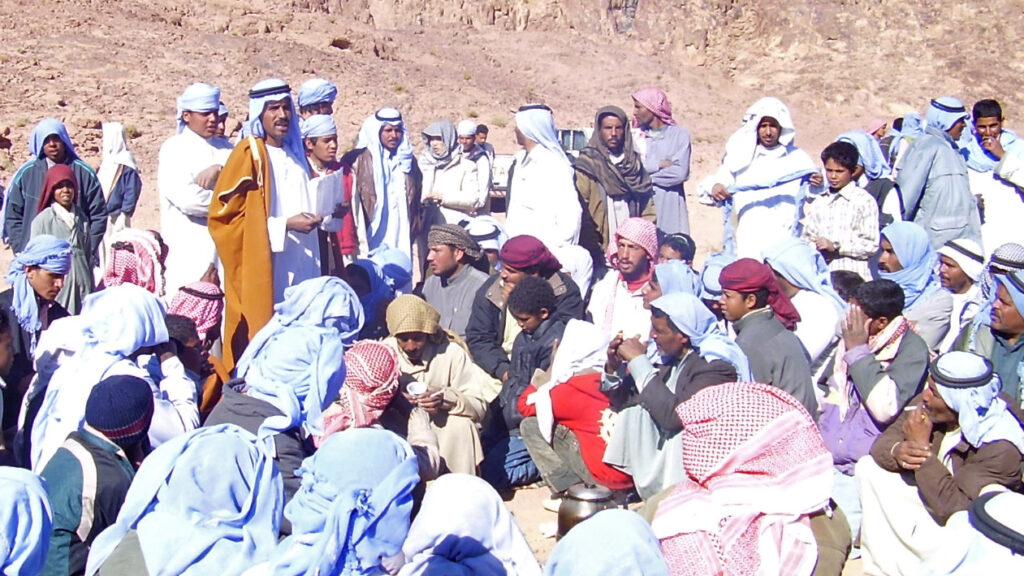
The Bedouin way of life is very simple and slow, with a fine balance of work and leisure time. It is a closed yet very welcoming society, where a complex system of family ties and strong traditions play the most important roles.
Map of Bedouin tribes in Sinai, Egypt
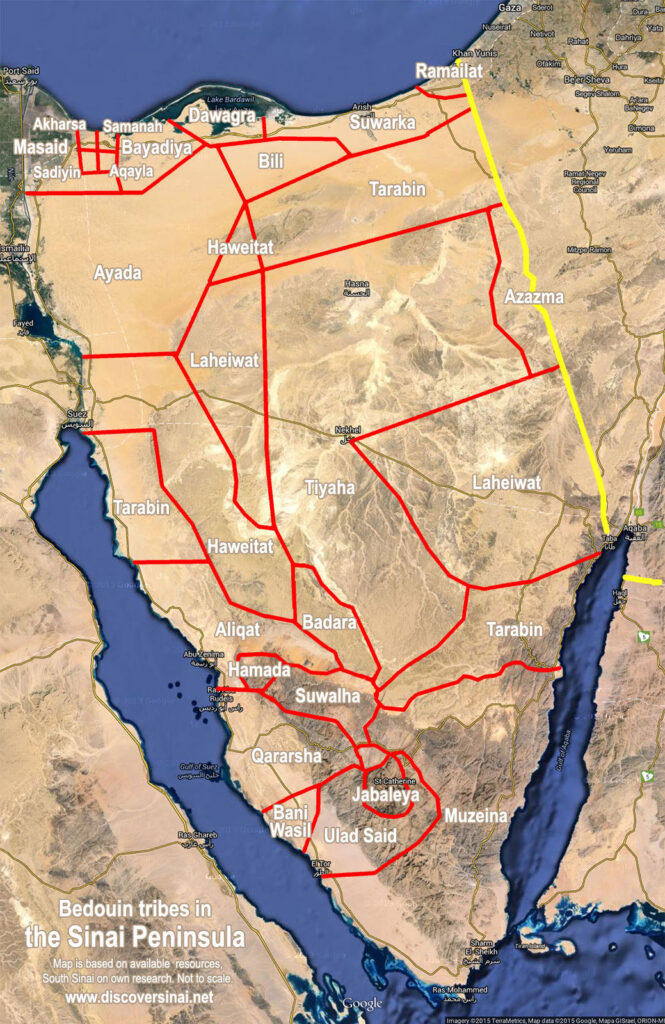
The map of the Sinai tribes above is based on several maps; use it as a close but not perfect approximation.
Tribal boundaries are well known to the Bedouin, but they do not generally restrict movement across the land. Access to grazing areas and water sources is regulated through long-standing intertribal agreements. Under traditional custom, a person who discovers a new water source may settle beside it, provided it lies within their tribe’s territory, but they cannot deny others access to the water. Individuals may also hold exclusive rights to cultivate particular plots of land, although this depends largely on the availability of water.
The Bedouin have their own customary legal system, known as Orf, which is recognized to a degree by the Egyptian authorities. Internal disputes are often resolved within the tribal framework rather than through state institutions. Important matters are discussed at tribal gatherings known as majlis, where decisions are reached by consensus. While everyone may speak, particular weight is given to respected elders and tribal leaders. The tribal sheikh derives his authority from a combination of family standing, personal reputation, wealth, and his ability to support and represent the interests of his people.
Bedouin society is built around strong tribal and family ties, yet visitors often find it remarkably welcoming. Hospitality is a central cultural value, and guests are treated with great respect. Exploring the mountains or desert with a Bedouin guide offers a unique opportunity to learn about a culture shaped by centuries of life in one of the world’s most challenging environments.
THE SINAI: The Sinai Peninsula > The Bedouin > Transport