Bedouin Medicinal Plants and Mountain Gardens Tour
A Bedouin medicinal plants and mountain gardens tour offers a deeper way to explore Saint Catherine beyond its famous peaks and historic landmarks. During the experience, visitors learn about wild herbs, aromatic plants, traditional orchards, water-harvesting techniques, and the practical knowledge passed down through local Bedouin families for generations.
Sinai Compass helps organize these visits in cooperation with local guides, farmers, garden owners, and members of the Bedouin community. Depending on the selected itinerary, weather conditions, and local availability, the experience may take place near Saint Catherine town or inside one of the surrounding mountain valleys.
Direct answer: A Bedouin medicinal plants and mountain gardens tour is a cultural and ecological experience that combines walking in the mountains of South Sinai, visiting traditional Bedouin gardens, and learning about local medicinal and aromatic plants. The tour presents traditional knowledge for educational purposes and does not replace professional medical care.
What Is a Bedouin Medicinal Plants and Mountain Gardens Tour?
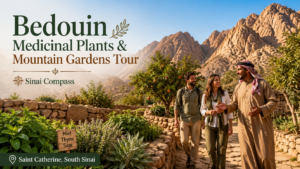
This is a guided experience focused on the relationship between the people of Saint Catherine and their mountain environment. Instead of passing quickly through the area, visitors enter a living agricultural space containing fruit trees, aromatic herbs, shaded seating areas, stone walls, and traditional systems designed to make the best use of water in an arid landscape.
The tour may include a visit to a local medicinal-herb project or a family-owned garden in one of the valleys. Some programs can also include a short hike, Bedouin tea, a traditional meal, or a simple overnight stay inside a mountain garden, depending on the arrangements confirmed before the trip.
There is no single fixed itinerary for every traveler. Some visitors may prefer a short experience close to town, while others may choose to hike to a more remote garden in the mountains. The route can therefore be adapted to the group’s fitness level, available time, season, and interests.
Where Are the Bedouin Mountain Gardens Located?
Traditional mountain gardens are found in the valleys and elevated areas surrounding Saint Catherine in South Sinai, Egypt. Many of these gardens are hidden between rocky formations, away from the busiest tourist routes, and are connected by mountain paths used by local communities for many years.
Sinai Compass describes these locations as traditional orchards surrounded by dry-stone walls. They may contain fruit trees, seasonal crops, herbs, and shaded areas where guests can rest. Their agricultural traditions are linked to the long history of the region and have been maintained and developed by the Jabaleya Bedouin community to suit the mountain environment.
Gardens and herbal projects can be found in areas such as Wadi Itlah and Al-Rasis. Reaching some gardens may require walking through rocky valleys, while other projects are located closer to Saint Catherine town.
Why Is the Plant Environment of Saint Catherine Unique?
The mountains of Saint Catherine are very different from the common image of a flat, empty desert. Changes in elevation, mountain valleys, natural springs, rainfall collection points, and temperature differences between day and night create several habitats for both wild and cultivated plants.
The Saint Catherine area is known for important botanical diversity, including plants that are restricted to the mountains of South Sinai or found in only a limited number of locations. Local Bedouin communities also possess extensive traditional knowledge about plants, their characteristics, and their historical uses.
However, many mountain plants are vulnerable to environmental pressure and uncontrolled harvesting. The purpose of a responsible tour is therefore to observe, learn, and support sustainable cultivation rather than remove plants from the wild.
What Can You See During the Tour?
The exact experience changes with the season because wild plants do not grow or flower at the same time throughout the year. Nevertheless, a Bedouin medicinal plants and mountain gardens tour may include the following features:
- Fruit trees cultivated inside traditional mountain gardens.
- Wild or cultivated medicinal and aromatic herbs.
- Dry-stone walls used to protect soil and define garden boundaries.
- Traditional channels and systems for directing rainwater.
- Agricultural terraces built on mountain slopes.
- Shaded seating areas used for receiving visitors.
- Simple tools for drying, sorting, or packaging herbs.
- Views of the valleys, cliffs, and mountain peaks surrounding Saint Catherine.
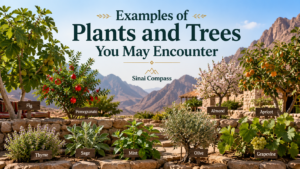
Mountain gardens in the region may contain almond, apple, apricot, fig, peach, pear, pomegranate, grape, and olive trees, as well as vegetables, wild herbs, and aromatic plants. What visitors see during a particular tour depends on the season and the selected garden.
Examples of Plants and Trees You May Encounter
| Category | Possible Examples | What You May Learn |
|---|---|---|
| Aromatic herbs | Mountain mint, wild thyme, and local sage varieties | Their scent, growing locations, and traditional drying or preparation methods |
| Fruit trees | Fig, pomegranate, almond, apricot, and apple trees | How trees are cultivated and protected in mountain valleys |
| Wild plants | Species that vary according to season and altitude | The difference between wild and cultivated plants and why uncontrolled harvesting is harmful |
| Daily crops | Vegetables, salad leaves, and household garden plants | How a garden may provide food for a family or visiting guests |
| Traditional medicinal plants | Herbs recognized by local farmers and knowledgeable community members | The cultural context of their use, without presenting them as medical prescriptions |
Local plant names may differ between families or locations, and accurate identification requires experience. Visitors should never consume a plant or purchase it for medical use without knowing its ingredients, possible risks, and suitability for their personal health.
What Is the Difference Between Learning About Herbs and Receiving Herbal Treatment?
The tour is an educational and cultural activity, not a medical consultation. Its purpose is to explain the relationship between the Bedouin community, local plants, and mountain agriculture. It is not intended to diagnose health conditions or prescribe herbal treatments.
A local host may explain how a certain plant was traditionally used or prepared as tea. However, historical use does not automatically prove that a plant is safe for every person or effective for every medical condition. see also.
Some herbs can interact with medications or may be unsuitable for pregnant women, children, or people with chronic illnesses. Travelers should speak with a qualified doctor or pharmacist before using any herbal product for therapeutic purposes.
How Do Mountain Gardens Support Agriculture in a Desert Environment?
Bedouin mountain gardens depend on a detailed understanding of the valley and the movement of water. When rain falls in the mountains, water can move quickly through rocky channels. Farmers traditionally direct part of this water toward the soil, storage areas, and cultivated terraces instead of allowing it to leave the garden completely.
Dry-stone walls help protect the soil and reduce the impact of floods and strong winds. Agricultural terraces make it possible to use sloping land, while larger trees provide shade for smaller plants and create a more stable microclimate inside the garden.
Traditional gardening practices in Saint Catherine may also include rainwater harvesting, adaptation to sudden floods, soil protection, and grafting selected fruit trees onto root systems that are more tolerant of local mountain conditions.
Cultural and Environmental Benefits of the Tour
Learning Directly from Bedouin Community Members
The tour allows visitors to hear about plants and agriculture from local farmers, guides, and garden owners. Rather than receiving general information separated from the landscape, travelers learn through personal experience, family stories, and practical examples.
Supporting the Local Economy
When a visit is organized with local guides, farmers, drivers, and service providers, a greater share of tourism income remains within the community. This can help families continue caring for traditional gardens and offering small-scale experiences instead of depending only on mass tourism.
Encouraging Plant Conservation
Cultivating popular herbs inside managed gardens can be a more sustainable alternative to continually collecting them from the wild. Tourism can also give plants greater value as living parts of the local ecosystem rather than as products to be removed.
Providing a Quiet Alternative to Busy Tourist Routes
Many travelers visit Saint Catherine for Mount Sinai and the monastery. The surrounding gardens and valleys reveal a quieter side of the region, making the tour suitable for nature lovers, photographers, cultural travelers, hikers, and people interested in traditional agriculture.
Why Is This Tour Valuable for International Travelers?
Visitors do not need a background in botany to enjoy the experience. The tour connects global topics such as biodiversity, climate adaptation, water management, sustainable agriculture, and community-based tourism with a real local landscape.
It is also suitable for international travelers who want to move beyond fast sightseeing and interact respectfully with local communities. Explanations can include local plant names and, when accurate information is available, their common or scientific names.
The experience may also appeal to photographers, researchers, environmental students, university groups, sustainable-agriculture enthusiasts, and travelers interested in intangible cultural heritage.
Suggested Tour Itinerary
- Meet in Saint Catherine: Meet the local guide and review the route, weather conditions, and walking level.
- Travel or walk to the garden: The method of access depends on the selected garden and itinerary.
- Learn about the valley: Discover the mountain formations, water sources, and surrounding vegetation.
- Explore the garden: See fruit trees, agricultural terraces, stone walls, and traditional irrigation methods.
- Identify available herbs: Learn about plants that are visible during the season and how local people recognize them.
- Meet a Bedouin host: Hear stories about the garden and the knowledge passed down within the family.
- Take a local break: The visit may include tea or a simple meal when arranged in advance.
- Return or continue hiking: The garden visit can sometimes be combined with another mountain activity.
This itinerary is only an example. The starting point, duration, host, walking distance, and included activities may vary according to the selected program, season, weather, and local availability.
Is the Tour Suitable for All Visitors?
The tour can be adapted to different ability levels, but suitability depends on the location of the garden. Some visits require only a short walk, while others involve longer hikes, uneven paths, rocky surfaces, or gradual climbs.
Travelers should inform Sinai Compass in advance about the ages of participants, general fitness level, mobility limitations, injuries, or health concerns. This helps the team recommend a realistic route rather than selecting an experience that is too demanding.
Children may enjoy the tour when the route is short, safe, and interactive. They should still be supervised near stone walls, rocky slopes, and agricultural areas. Older travelers may prefer an accessible garden with shorter walking distances and additional rest stops.
Best Time for a Medicinal Plants and Mountain Gardens Tour
The best season depends on what you want to experience. Spring is often attractive for visitors interested in wild plants, seasonal flowers, and fresh growth. Cooler periods are usually more comfortable for walking through valleys and exploring mountain gardens.
Nights in Saint Catherine can be cold even when coastal destinations in South Sinai are warm. Weather conditions can also change quickly in the mountains, so travelers should confirm the expected temperature, route conditions, and required clothing before departure.
No tour can guarantee that a specific plant will be flowering or visible. Plant growth depends on rainfall, altitude, temperature, and seasonal conditions. A high-quality tour focuses on the entire ecosystem and local gardening traditions rather than promising a fixed list of herbs.
What Should You Wear and Bring?
- Comfortable walking shoes with good grip.
- Layered clothing suitable for changing temperatures.
- A hat, sunglasses, and appropriate sun protection.
- Enough drinking water for the length of the route.
- A small backpack that leaves both hands free.
- Personal medication and necessary health supplies.
- A camera or phone with an additional battery if required.
- Local currency for small purchases that are not included in the tour.
Avoid carrying unnecessary heavy items or wearing new shoes for the first time on the day of the tour. During winter or periods of lower temperatures, ask whether a warm jacket, hat, or gloves are recommended.
Responsible Visiting Rules for Bedouin Gardens
A mountain garden is not simply a tourist attraction. It is private property, a family space, a food source, and part of the owner’s livelihood. Visitors should treat it with the same respect they would show when entering someone’s home.
- Do not pick plants, herbs, or fruit without clear permission.
- Do not enter closed farming areas before asking the host.
- Do not leave rubbish inside the garden or valley.
- Ask permission before photographing people, homes, or private areas.
- Avoid publishing exact locations of rare plants.
- Purchase local products responsibly and in reasonable quantities.
- Follow the guide’s instructions about the route, weather, and safety.
- Do not present traditional knowledge as guaranteed medical advice.
Why Choose Sinai Compass for the Tour?
Sinai Compass is a locally owned and operated Bedouin travel company that works with a network of guides, drivers, camel handlers, garden owners, camp operators, and other service providers across South Sinai. This local connection helps travelers meet people who understand the region through daily experience rather than through a standardized tourism program.
The company also emphasizes responsible travel and support for local families and community-based projects. Mountain gardens, family-owned businesses, and local guides can all benefit when tourism services are arranged directly and respectfully.
Sinai Compass can help organize visits to medicinal and aromatic plant projects in Saint Catherine or nearby valleys. This allows the tour to be adjusted according to the visitor’s available time, walking ability, interest in plants, cultural preferences, photography goals, and desired level of activity.
Important Tips Before Booking
- Provide the exact number and ages of participants.
- Explain the group’s fitness and walking ability honestly.
- Ask about the actual walking time, not only the total tour duration.
- Confirm whether transportation, food, water, and guide services are included.
- Ask for the starting point and expected finishing point.
- Check what toilets or basic facilities are available.
- Mention allergies, dietary requirements, and relevant health conditions.
- Ask what happens if the weather changes or the route becomes unsafe.
- Confirm photography rules before entering private spaces.
- Do not purchase medicinal herbs based only on a general explanation.
Tours and activities are normally subject to availability and may change because of weather, road conditions, safety requirements, official instructions, or local circumstances. Payment, modification, and cancellation terms should always be confirmed for the selected itinerary before booking.
Common Mistakes to Avoid
Expecting a Medical Consultation
The tour is a cultural and environmental experience. Visitors should not ask local hosts to diagnose medical conditions or replace a doctor’s prescription with a traditional herb.
Wearing Unsuitable Shoes
A route may appear short, but loose stones, gravel, and uneven ground make supportive footwear essential.
Collecting Plants from the Wild
Removing even one plant may damage a rare or slow-growing species. Observe plants without disturbing them and purchase products only from responsible local sources.
Booking Without Explaining Your Fitness Level
Failing to mention mobility concerns, injuries, or fear of heights may result in a route that is uncomfortable or unsafe for the participant.
Treating the Garden as a Public Tourist Site
Respecting family privacy, asking before taking photographs, and following the host’s instructions are essential parts of the experience.
How to Book a Bedouin Medicinal Plants and Mountain Gardens Tour
Start by sending Sinai Compass your expected travel date, number of participants, accommodation location, available time, and preferred walking level. It is also helpful to explain whether your main interest is medicinal herbs, mountain orchards, photography, Bedouin food, cultural learning, or hiking.
After reviewing these details, the team can suggest a suitable garden or local project and explain the meeting point, expected duration, walking conditions, included services, and any preparation requirements.
The clearer your information is, the easier it becomes to design a balanced experience that combines learning, comfort, safety, and respect for the local community.
Conclusion
A Bedouin medicinal plants and mountain gardens tour offers a quiet and meaningful way to experience the mountains of Saint Catherine. It combines nature, traditional Bedouin knowledge, mountain agriculture, local hospitality, and walking in a single experience that can be adapted to different interests and fitness levels.
The real value of the tour is not simply learning the names of several herbs. It is understanding how people and plants have adapted to the mountain environment, how water is managed in a dry region, and how responsible tourism can support the families who continue to care for these gardens.
Contact Sinai Compass to discuss your travel date, preferred walking level, and interests. The team can help arrange a local experience that introduces you to Saint Catherine’s mountain gardens and Bedouin plant knowledge in a respectful and responsible way.
Frequently Asked Questions
What is a Bedouin medicinal plants tour?
It is a cultural and ecological experience that introduces visitors to local herbs, plants, traditional gardens, and Bedouin agricultural knowledge in the mountains of Saint Catherine.
Where does the tour take place?
The tour usually takes place in Saint Catherine or one of the surrounding mountain valleys in South Sinai, depending on the selected garden and itinerary.
How long does the tour take?
The duration varies according to the location of the garden, walking distance, and included activities. The exact schedule should be confirmed when booking.
Can I visit a garden without a long hike?
Shorter and more accessible options may be available near Saint Catherine, depending on local availability and the selected date.
Is the tour suitable for children?
Yes, provided that a short and safe route is selected and children are supervised around rocky paths, slopes, and garden walls.
Can visitors buy herbs during the tour?
Some local projects may sell dried herbs or other products, but availability and prices depend on the season and the individual project.
Do the herbs shown during the tour treat illnesses?
The tour presents traditional knowledge for educational purposes. Visitors should consult a doctor or pharmacist before using any herb to treat a health condition.
What is the best season for the tour?
Spring and other mild-weather periods are often comfortable for walking and may offer greater plant diversity, although conditions vary each year.
Can the tour be combined with Mount Sinai or Saint Catherine’s Monastery?
It may be possible to combine the experiences in one itinerary, depending on time, opening hours, walking ability, and travel distances.
How can I book with Sinai Compass?
Send your travel date, group size, accommodation location, preferred walking level, and main interests to receive a suitable itinerary and booking details.