Jebel Abbas Basha and Bab El Donya Trek
The Jebel Abbas Basha and Bab El Donya trek takes travelers into one of the most dramatic high-mountain landscapes in Egypt. Located around Saint Catherine in South Sinai, these trails combine rugged granite peaks, quiet wadis, traditional Bedouin mountain routes, panoramic viewpoints, natural springs, and the remains of an unfinished nineteenth-century palace.
For travelers coming to Egypt who want to experience more than archaeological sites and Red Sea resorts, trekking around Jebel Abbas Basha and Bab El Donya offers a completely different side of the country. With thoughtful preparation and experienced local guidance, sinaicompass can help travelers approach this mountain region as an organized adventure rather than simply another sightseeing stop.
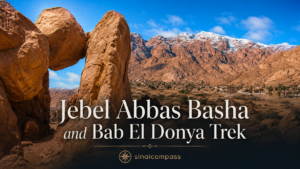
Jebel Abbas Basha and Bab El Donya Trek at a Glance
The two mountains are part of the highlands surrounding Saint Catherine in South Sinai. Although they can appear within the same multi-day trekking itinerary, they offer noticeably different experiences.
| Feature | Jebel Abbas Basha | Bab El Donya |
|---|---|---|
| Main attraction | Mountain panorama and unfinished palace remains | Remote highland scenery and expansive western views |
| Approximate elevation | Around 2,380 meters | Around 2,090 meters |
| Landscape | Rocky mountain paths, passes and granite peaks | High valleys, boulder sections and exposed viewpoints |
| Nearby highlights | Saint Catherine highlands and traditional mountain gardens | Ain Najila spring and surrounding mountain basins |
| Best suited to | Hikers interested in scenery and history | Travelers seeking a quieter wilderness experience |
| Typical difficulty | Moderate to challenging depending on route | Challenging on longer highland itineraries |
Distances and difficulty can vary considerably because local guides can connect the peaks through several wadis, mountain passes and camping areas. Travelers should therefore evaluate the actual itinerary rather than relying only on the mountain name.
Where Are Jebel Abbas Basha and Bab El Donya?
Jebel Abbas Basha and Bab El Donya are located in the mountainous Saint Catherine region of South Sinai, Egypt. The area forms part of one of Egypt’s most distinctive highland environments, characterized by granite mountains, deep valleys, isolated gardens and traditional Bedouin routes.
Saint Catherine is very different from Egypt’s Nile Valley destinations. Instead of temples, farmland and river landscapes, travelers encounter steep mountain walls, narrow passes and vast stretches of exposed rock.
The wider Saint Catherine area also has exceptional cultural significance. UNESCO recognizes the Saint Catherine Area as a World Heritage Site because of its historic, religious and cultural landscape surrounding Saint Catherine’s Monastery and Mount Sinai.
For international travelers already planning to visit Cairo, Sharm El Sheikh, Dahab or other parts of Egypt, adding several days in Saint Catherine can turn a traditional sightseeing itinerary into a broader adventure through the country’s mountain environment.
What Makes Jebel Abbas Basha Special?
Jebel Abbas Basha combines one of South Sinai’s memorable mountain viewpoints with an unusual piece of nineteenth-century Egyptian history.
Near the upper part of the mountain are the remains of a palace project associated with Abbas Pasha I, the nineteenth-century ruler of Egypt and grandson of Muhammad Ali Pasha. The palace was never completed, leaving foundations and stone remains high above the surrounding valleys.
Today, the unfinished structure adds a historical dimension to the hike. Instead of reaching a summit marked only by rocks, hikers encounter evidence of a human project in an otherwise remote mountain landscape.
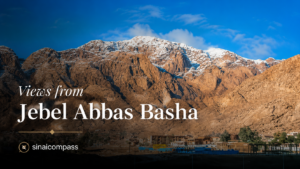
Views from Jebel Abbas Basha
One of the main reasons to climb Jebel Abbas Basha is the panorama. From the higher sections, hikers can look across the Saint Catherine highlands, where overlapping granite ridges create an almost continuous mountain horizon.
The experience changes with the light. Morning can produce crisp ridgelines and long shadows, while later daylight reveals the different brown, red and grey tones of the granite landscape.
Because this is exposed mountain terrain, visibility depends on weather conditions. A clear day can dramatically improve the experience, while wind, cloud or haze may alter the views and the difficulty of the trek.
Why Hike Bab El Donya?
Bab El Donya is valued for its remote setting, dramatic mountain scenery and views toward the lower ranges of western Sinai. Its Arabic name is commonly translated as the “Gate of the World,” a fitting description for a summit where the highlands appear to open toward an enormous horizon.
The route can include high valleys, rocky sections and isolated mountain basins. Depending on the itinerary, trekkers may also pass Ain Najila, a mountain spring located near the Bab El Donya area.
On exceptionally clear days, viewpoints in this western section of the highlands can reveal distant landscapes toward the Gulf of Suez. Egypt’s official tourism information specifically highlights Bab al-Donya and nearby Gabal Bab for their mountain views and the spring-fed environment around Ain Najila.
Bab El Donya Is More About the Journey Than the Summit
The experience should not be reduced to simply reaching the highest point. Walking through the surrounding wadis and mountain passages is a major part of the attraction.
Unlike highly developed tourist attractions, these trails have relatively little infrastructure. The absence of busy roads, shops and urban distractions is exactly what gives the Bab El Donya trek its wilderness character.
How Difficult Is the Jebel Abbas Basha and Bab El Donya Trek?
The trek is generally better suited to travelers with reasonable fitness and previous experience walking for several hours over uneven terrain. You do not necessarily need technical mountaineering experience, but this should not be treated as a casual city walk.
Conditions can include rocky paths, steep ascents, long descents, boulder fields and exposed mountain terrain. Some itineraries also contain short scrambling sections where hikers may use their hands for balance.
Difficulty depends on several factors:
- The exact route selected by the guide
- Total walking distance for the day
- Elevation gain and descent
- Temperature and wind
- Amount of equipment carried
- Your personal fitness and trekking experience
- Whether the trek is completed as a day hike or part of a multi-day route
A person who regularly hikes, walks long distances or trains cardiovascular fitness will normally adapt more easily than someone arriving without preparation.
What a Multi-Day Sinai Trek Can Look Like
Jebel Abbas Basha and Bab El Donya are often incorporated into longer journeys across the Saint Catherine highlands rather than combined into one rushed day.
A multi-day route may connect mountain peaks with valleys, springs, Bedouin gardens and overnight camps. The exact sequence should remain flexible because weather, group fitness and local conditions can affect the safest and most enjoyable route.
- Enter the highlands: Leave the more developed Saint Catherine area and follow mountain trails into the surrounding wadis.
- Cross mountain valleys: Walk through granite basins, rocky passes and traditional routes used by local communities.
- Explore Bab El Donya: Approach the western highlands and, depending on the route, pass springs and mountain basins before climbing toward the viewpoint.
- Camp or stay in a mountain garden: Longer itineraries may use traditional camping areas away from the town.
- Continue toward Jebel Abbas Basha: Cross another section of the highlands before approaching the historic palace area.
- Return toward Saint Catherine: Descend through established mountain routes and wadis with your guide.
This approach gives travelers enough time to appreciate the landscape rather than treating each mountain as another summit to tick off a list.
Why This Trek Matters for Tourists Visiting Egypt
Many first-time visitors associate Egypt primarily with the Pyramids of Giza, Luxor, Aswan, Nile cruises and Red Sea beaches. The Sinai highlands reveal another geographical identity entirely.
Here, the experience is based on walking, geology, open landscapes and interaction with local mountain culture. This makes the Jebel Abbas Basha and Bab El Donya trek especially attractive to travelers who want to combine Egypt’s famous archaeological attractions with outdoor adventure.
The trek can also work naturally within a broader South Sinai journey. Travelers staying around Dahab or Sharm El Sheikh can consider Saint Catherine as a mountain extension to a Red Sea itinerary, although transfer times and current road arrangements should always be confirmed when planning the trip.
The Role of Bedouin Knowledge in Sinai Trekking
Local knowledge is one of the most important elements of trekking in the Saint Catherine mountains. Routes may cross valleys and passes that look similar to visitors who are unfamiliar with the landscape.
The Jabaleya Bedouin community has longstanding connections with the Saint Catherine highlands. Local mountain knowledge includes trails, springs, gardens, weather patterns and practical ways of traveling through the terrain. see also.
A guide contributes much more than navigation. A knowledgeable local guide can help determine walking pace, suitable rest points, water planning, route adjustments and whether changing conditions justify modifying the day’s plan.
For visitors unfamiliar with desert and high-altitude mountain environments, this local knowledge can significantly improve both the quality and organization of the trek.
Best Time for Jebel Abbas Basha and Bab El Donya Trekking
Cooler periods are generally more comfortable for demanding hiking in South Sinai, while extreme summer heat can make long exposed walks substantially harder.
Spring and autumn are popular for mountain trekking because conditions can be more moderate. Winter can also provide excellent visibility and cool daytime hiking, but temperatures at elevation can become very cold and mountain weather can change quickly.
Travelers should never choose equipment based only on temperatures at Sharm El Sheikh, Dahab or sea level. Saint Catherine sits in a high mountain environment and can feel dramatically colder, particularly before sunrise, after sunset and in windy conditions.
Check a reliable local forecast shortly before departure and discuss conditions with your guide rather than relying on seasonal assumptions.
What to Pack for the Trek
Your equipment should match the season, itinerary length and whether you will camp overnight. Avoid packing unnecessary weight, but do not compromise on footwear, sun protection or warm layers.
Essential Hiking Equipment
- Comfortable hiking shoes or boots with reliable grip
- Lightweight daypack or trekking backpack
- Reusable water containers
- Sun hat and sunglasses
- High-SPF sunscreen
- Breathable hiking clothing
- Warm insulating layer for colder conditions
- Wind-resistant outer layer
- Headlamp with spare power
- Personal medications
- Basic personal first-aid items
- Portable battery pack
- Snacks appropriate for long walking days
If camping is part of the program, confirm whether sleeping bags, blankets, tents or other overnight equipment are supplied. Do not assume camping equipment is automatically included in every trekking package.
Food and Water Planning in the Sinai Mountains
Water planning should be established before starting the trek. Although natural springs exist in parts of the Saint Catherine highlands, their availability should never be assumed without current local knowledge.
Your guide or trek organizer should explain where drinking water comes from, how much you need to carry and whether water is replenished during the route.
Meals on multi-day hikes may be relatively simple because everything must be transported or prepared in remote locations. For many travelers, sharing meals in a mountain garden or camp becomes one of the most memorable parts of the experience.
Tell the organizer in advance about vegetarian requirements, food allergies or other dietary restrictions rather than waiting until the group has entered the mountains.
How to Prepare Before Arriving in Saint Catherine
You do not need extreme athletic training, but arriving with basic endurance makes the trek considerably more enjoyable.
- Walk regularly for several weeks before traveling.
- Add hills or stairs to your training when possible.
- Practice walking for several consecutive hours.
- Wear your planned trekking shoes before the trip.
- Train while carrying a light backpack.
- Improve hydration habits before traveling to a dry climate.
- Tell your trek organizer about relevant mobility limitations.
The objective is not speed. Good preparation means being able to maintain a steady pace across uneven terrain without becoming exhausted early in the day.
Common Mistakes to Avoid on a Sinai Mountain Trek
Assuming South Sinai Is Always Hot
Coastal weather does not accurately represent conditions in the high mountains. Carry suitable layers for the season.
Wearing New Shoes
New footwear can cause blisters during long walking days. Use shoes that have already been tested on similar terrain.
Underestimating Water Needs
Dry air, sunshine and physical exertion can increase fluid requirements even when temperatures feel comfortable.
Depending Completely on Your Phone
Do not assume continuous mobile reception or internet access in remote valleys. Your trekking plan should not depend on online navigation.
Ignoring Weather Changes
Mountain conditions can change. Be prepared to accept route changes recommended by experienced local guides.
Trying to Fit Too Much Into One Day
A packed itinerary may look efficient on paper but can reduce enjoyment and increase fatigue. Allow enough time for breaks, views and changing terrain.
Why Plan the Trek With sinaicompass?
A successful mountain trek requires more than choosing two destinations on a map. Travelers need to consider routes, local guides, transfers, water, food, equipment, overnight arrangements and weather alternatives.
Working with sinaicompass gives travelers a practical way to organize those details around a realistic South Sinai itinerary. This is particularly useful for international visitors who are combining Saint Catherine with destinations such as Cairo, Dahab or Sharm El Sheikh and do not want to coordinate each stage separately.
Before confirming any trek, ask exactly what your chosen program includes. Clarify the guide arrangement, transportation, meals, drinking water, accommodation or camping equipment, expected walking hours and any equipment you must bring yourself.
A clearly explained itinerary is more valuable than choosing a trek based only on a summit name or attractive photograph.
Important Tips Before Booking
- Ask for the expected daily walking time rather than distance alone.
- Confirm whether scrambling is included on your selected route.
- Check the expected sleeping arrangements for multi-day trips.
- Discuss your fitness level openly with the organizer.
- Confirm water and meal arrangements before departure.
- Ask whether luggage transport is available or whether you carry everything yourself.
- Check current weather shortly before the trek.
- Review current travel guidance relevant to your nationality before traveling.
- Keep some flexibility in your schedule in case mountain conditions require adjustments.
Is the Jebel Abbas Basha and Bab El Donya Trek Worth It?
For travelers who enjoy hiking, quiet landscapes and destinations beyond Egypt’s standard tourist circuit, the Jebel Abbas Basha and Bab El Donya trek can be one of the most distinctive experiences in South Sinai.
Jebel Abbas Basha brings together highland scenery and the remains of an unusual royal project, while Bab El Donya provides a more remote mountain atmosphere and expansive views toward western Sinai.
Together, they demonstrate that Egypt is not only a destination for ancient monuments and beaches. The country also contains high mountain terrain where travelers can walk through granite valleys, follow traditional Bedouin routes and experience long stretches of genuine wilderness.
The key is to approach the trek with realistic expectations. Prepare physically, bring appropriate equipment, respect changing weather and rely on knowledgeable local guidance.
Frequently Asked Questions About Jebel Abbas Basha and Bab El Donya
Where is Jebel Abbas Basha?
Jebel Abbas Basha is located in the Saint Catherine highlands of South Sinai, Egypt, within the wider mountainous region surrounding Saint Catherine.
How high is Jebel Abbas Basha?
Jebel Abbas Basha reaches approximately 2,380 meters above sea level, making it one of the prominent peaks of the Saint Catherine highlands.
What is special about Jebel Abbas Basha?
The mountain is known for panoramic highland views and the remains of an unfinished nineteenth-century palace associated with Abbas Pasha I.
Where is Bab El Donya?
Bab El Donya is a mountain in the Saint Catherine region of South Sinai, overlooking the western side of the high mountain landscape.
What does Bab El Donya mean?
Bab El Donya is commonly translated as “Gate of the World,” a name that reflects the mountain’s expansive views across the surrounding landscape.
Is the Jebel Abbas Basha and Bab El Donya trek difficult?
It is generally a moderate-to-challenging trekking experience, depending on the route, walking distance, weather and number of days involved.
Do I need climbing experience?
Technical climbing experience is not normally required on standard trekking routes, although hikers should be comfortable with rocky terrain, steep sections and long walking days.
Can I visit both mountains on the same trip?
Yes. Jebel Abbas Basha and Bab El Donya can be incorporated into the same multi-day Saint Catherine trekking itinerary.
What should I wear for trekking in Saint Catherine?
Wear tested hiking footwear, comfortable trekking clothes and layered clothing suitable for sun, wind and potentially cold mountain temperatures.
Should I book a local guide?
Local guidance is strongly advisable because routes cross remote mountain terrain where knowledge of paths, water sources, weather and local conditions is important.
Plan Your South Sinai Trek With sinaicompass
The Jebel Abbas Basha and Bab El Donya trek is an opportunity to experience Egypt from a perspective that many visitors never see: high granite mountains, remote valleys, Bedouin trails, historic remains and enormous open horizons.
If you are building an Egypt itinerary and want to include serious hiking in South Sinai, contact sinaicompass to discuss a route suited to your available time, trekking experience and travel plans. Confirm the details in advance, arrive prepared and give the Saint Catherine mountains enough time to become more than a quick stop on your journey.