Book a Local Bedouin Guide for Mount Sinai
If you want to book a local Bedouin guide for Mount Sinai, arrange your guide before the hike and share your travel date, group size, fitness level, starting location and whether you prefer sunrise, daytime or sunset. A knowledgeable local guide does much more than point toward the summit: they help manage the route, pace, timing and changing mountain conditions while giving cultural context to the Saint Catherine landscape. Sinai Compass works with local Bedouin guides in the Saint Catherine region and can coordinate a Mount Sinai experience around your actual travel plans.
Mount Sinai, locally known as Jebel Musa, rises to approximately 2,285 metres near Saint Catherine in South Sinai. Egypt’s official tourism information describes the popular pre-dawn summit trek as taking approximately three to four hours and specifically refers to hiking with Bedouin guides. The journey is accessible to many reasonably active visitors, but rocky ground, darkness, temperature changes and several hours of climbing mean that good preparation still matters.
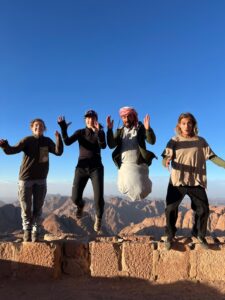
Why Book a Local Bedouin Guide for Mount Sinai?
A local Bedouin guide combines practical mountain knowledge with an understanding of the cultural landscape surrounding Jebel Musa. For a visitor seeing the Saint Catherine mountains for the first time, paths, valleys and rock formations can look similar. A guide who knows the area can help maintain an appropriate pace, explain route choices and adjust the plan when conditions require it.
This becomes especially valuable if your Mount Sinai trip involves more than simply following the busiest summit route. The wider region contains valleys, traditional gardens, religious sites, old paths and quieter areas of the Jebel Musa–Ras Safsafa landscape that are much easier to understand through local knowledge.
A good Mount Sinai guide is not simply someone who knows where the summit is. The real value lies in knowing how to move through the mountain responsibly, realistically and with an understanding of the place.
What Does a Local Bedouin Guide Actually Do?
A Bedouin mountain guide can support several parts of the experience that independent visitors may overlook. The exact service should always be confirmed before booking, but local guiding commonly focuses on the hike itself rather than simply meeting you for a few minutes at the trailhead.
- Help select an appropriate route and hiking schedule.
- Set a sustainable pace for the group.
- Manage timing for sunrise, sunset or daylight walking.
- Identify practical places for rest stops.
- Help interpret trail junctions and mountain terrain.
- Provide local context about Saint Catherine and Bedouin heritage.
- Advise when weather, access or trail conditions require changes.
- Help visitors behave respectfully around sacred, historic and community spaces.
Local knowledge becomes even more useful away from the main tourist flow. Digital maps can help with general orientation, but they do not replace current knowledge of access, weather, local arrangements or the meaning of places encountered along the route.
Where Is Mount Sinai?
Mount Sinai is located beside the town of Saint Catherine in South Sinai, Egypt. The mountain is commonly called Jebel Musa in Arabic and forms part of a dramatic granite mountain landscape far removed from the beaches and resorts usually associated with southern Sinai.
The wider Saint Catherine Area is a UNESCO World Heritage Site and has exceptional religious importance to Christianity, Islam and Judaism. Saint Catherine’s Monastery stands within this sacred landscape and remains a functioning religious institution with roots extending back to the sixth century.
For travelers, this means Mount Sinai should be approached as more than an outdoor viewpoint. Hiking here takes place within a living cultural, religious and natural landscape where respectful behavior matters.
How Difficult Is the Mount Sinai Hike?
Mount Sinai is achievable for many reasonably active travelers, but it is still a genuine mountain walk. Expect prolonged uphill movement, uneven rocky surfaces and a long descent. Sunrise hikers also complete much of the ascent in darkness.
The official Egyptian tourism portal describes the pre-dawn trek as approximately three to four hours to reach the 2,285-metre summit. Individual times vary according to fitness, weather, crowds, rest stops and the route followed.
Who should discuss the route carefully before booking?
Anyone with limited hiking experience, mobility concerns or difficulty walking continuously uphill should explain this before confirming the trip. Families traveling with children should also discuss ages and walking ability rather than assuming the standard itinerary suits everyone.
A private guide arrangement can be particularly useful because the experience can be discussed around the actual group rather than forcing every traveler into the same pace.
Sunrise or Sunset: Which Mount Sinai Hike Should You Book?
Choose sunrise for the classic Mount Sinai experience and sunset for a daylight ascent and potentially quieter atmosphere. Neither option is automatically better.
| Feature | Sunrise Hike | Sunset Hike |
|---|---|---|
| Ascent | Mostly at night or before dawn | Mostly in daylight |
| Main experience | Sunrise from the mountain | Late-afternoon scenery and sunset |
| Sleep schedule | Requires a very early or overnight start | More conventional daily schedule |
| Lighting equipment | Headlamp essential for ascent | Headlamp important for descent |
| Atmosphere | Popular traditional choice | Can feel more relaxed depending on the date |
If Saint Catherine’s Monastery is also important to you, discuss the complete schedule before choosing a hike. Monastery visitor arrangements depend on its religious calendar and current opening schedule, so entrance should never be assumed solely because you are climbing Mount Sinai.
How to Book a Local Bedouin Guide for Mount Sinai
Booking is easier when you provide enough information for the organizer to understand what kind of mountain experience you actually need.
- Choose your date. Give your exact intended hiking day rather than only the month.
- State where you are staying. Mention Saint Catherine, Dahab, Sharm El Sheikh, Cairo or another starting point.
- Provide your group size. Include children and their ages where relevant.
- Describe your hiking ability. A simple explanation of recent hiking experience is useful.
- Choose sunrise, sunset or daytime. Tell the organizer which experience matters most.
- Ask what is included. Confirm guiding, transport, meals, entrance arrangements and any other services separately.
- Confirm meeting arrangements. Know where and when you will meet the guide.
- Reconfirm shortly before hiking. Weather, access arrangements and local conditions can change.
What Should You Ask Before Confirming Your Mount Sinai Guide?
A useful booking conversation should be specific. Do not choose only because a listing uses attractive photographs or promises an unforgettable experience.
- Will the guide stay with us throughout the hike?
- Is the hike private or shared with other travelers?
- Which general route is planned?
- What approximate walking difficulty should we expect?
- Where does the hike begin and finish?
- What time should we start?
- What equipment should we bring?
- Is transportation included?
- Are food or drinks included?
- What happens if weather or access conditions change?
Clear answers before payment are more valuable than vague assurances. Your booking confirmation should make it easy to understand which services are actually included.
Why Local Bedouin Knowledge Matters in Saint Catherine
The mountains surrounding Saint Catherine are connected with generations of Bedouin knowledge. The Jebeliya community is particularly associated with the High Mountain Region and its paths, gardens, valleys and relationship with Saint Catherine’s Monastery.
For travelers, this knowledge changes the experience. An old path becomes more than a line across the rocks. Stone walls, cultivated gardens, water systems and place names begin to reveal how people have lived within a demanding mountain environment.
Booking local guiding also gives travelers a more direct connection with people living in the destination. Responsible local tourism can keep a greater share of visitor spending within the community rather than treating Saint Catherine merely as a stop on a large external excursion.
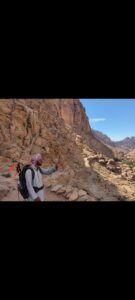
Why Choose Sinai Compass for a Mount Sinai Guide?
Sinai Compass is a Bedouin-owned and operated business working in the Saint Catherine and South Sinai region. The company states that it works with a network of local Bedouin guides, drivers, cameleers, camp operators and other local providers.
That local structure is particularly relevant for Mount Sinai because a successful trip may require more than the guide alone. Travelers staying in Dahab, Sharm El Sheikh or Cairo may also need transport, accommodation or coordination with other Saint Catherine activities.
Local knowledge rather than a generic excursion
Sinai Compass focuses on Sinai hiking, mountain experiences, desert travel and local cultural activities. This allows travelers to discuss whether they want the traditional Jebel Musa summit, a sunrise climb, a sunset experience or a more detailed exploration of the wider mountain landscape.
Private planning around the traveler
A couple interested in photography may want a different pace from an experienced hiking group. A family may need a simpler schedule, while someone interested in religious history may want additional time around the sacred landscape.
Discussing these priorities in advance gives the local guide useful information for planning a realistic experience.
What to Pack for a Guided Mount Sinai Hike
Pack for a mountain rather than assuming that Egypt will always feel hot. Saint Catherine’s elevation means conditions can differ significantly from Cairo, Sharm El Sheikh or the Red Sea coast, particularly at night and during cooler months.
- Comfortable hiking or walking shoes with reliable grip.
- Layered clothing that can be adjusted as temperatures change.
- A warm outer layer for early morning, evening or winter hikes.
- A headlamp rather than relying entirely on a phone flashlight.
- Water in the quantity recommended for your route and season.
- A small backpack.
- Sun protection for daylight sections.
- Personal medication.
- A charged phone and useful power bank.
- Passport or identification required for your journey and local arrangements.
Avoid carrying unnecessary weight. Ask the guide what is actually needed for your specific itinerary before filling your backpack.
Practical Tips Before Your Mount Sinai Hike
Check mountain conditions, not only coastal weather
Do not prepare based exclusively on the forecast for Sharm El Sheikh or Dahab. Ask about Saint Catherine and summit conditions for your hiking period.
Wear footwear you already know
A mountain trip is not the ideal place to test new shoes. Comfortable footwear with grip is more useful than footwear chosen mainly for photographs.
Tell the guide about relevant limitations
If someone in your group struggles with steep ground, prolonged walking or altitude, explain this during booking. That information helps create a more realistic plan.
Leave room in the itinerary
A Mount Sinai day may include road travel, hiking, rest and possibly a monastery visit. Avoid planning an immediate flight or tightly timed connection after the experience.
Common Mistakes When Booking a Mount Sinai Guide
Booking transport and assuming a guide is included
A driver and a mountain guide perform different services. If you are traveling from Dahab, Sharm El Sheikh or Cairo, confirm whether the quoted arrangement includes both transportation and guiding.
Choosing only by price
A lower figure is difficult to compare if you do not know what is included. Compare the route, duration, guide arrangement, transport and other services rather than looking only at the headline amount.
Relying on old online information
Access procedures, schedules and local arrangements can change. Confirm current details for your actual travel date instead of assuming a blog post or previous travel report remains accurate.
Underestimating the descent
Reaching the summit is only half the mountain journey. Descending rocky ground after several hours of walking can be demanding on tired legs, so keep enough energy for the return.
Treating the landscape only as a photo location
Mount Sinai belongs to a landscape with deep spiritual importance and living local traditions. Follow your guide’s advice around sacred sites, private areas, gardens and local communities.
Is Booking a Local Bedouin Guide Worth It?
For most first-time visitors, a local Bedouin guide adds value well beyond navigation. The benefit comes from combining practical mountain experience with local context, realistic pacing and knowledge of the Saint Catherine landscape. see also.
If your objective is simply to reach a famous viewpoint as quickly as possible, you may miss much of what makes this part of Egypt distinctive. Jebel Musa sits inside a wider landscape shaped by religious history, Bedouin communities, mountain gardens, granite valleys and old routes.
Experiencing that landscape with someone who knows it locally can turn a summit hike into a much deeper journey through South Sinai.
Frequently Asked Questions About Booking a Bedouin Guide for Mount Sinai
1. Do you need a guide to climb Mount Sinai?
Travelers should confirm current local guide and access arrangements for their date. Egypt’s official tourism information describes the Mount Sinai pre-dawn trek as being undertaken with Bedouin guides.
2. How do I book a local Bedouin guide for Mount Sinai?
Provide your travel date, group size, accommodation location, hiking ability and preferred sunrise, sunset or daytime schedule to a local operator such as Sinai Compass.
3. How high is Mount Sinai?
Mount Sinai, or Jebel Musa, reaches approximately 2,285 metres above sea level.
4. How long does it take to climb Mount Sinai?
Egypt’s official tourism information suggests approximately three to four hours for the popular pre-dawn ascent, although individual times vary.
5. Is Mount Sinai difficult for beginners?
Many reasonably active beginners can complete the hike, but they should expect several hours of uphill walking, rocky terrain and a long descent.
6. Can I book a private Mount Sinai guide?
Yes. Private guiding can be arranged for solo travelers, couples, families or private groups, subject to local availability and current arrangements.
7. Is sunrise or sunset better on Mount Sinai?
Sunrise offers the classic overnight experience, while sunset allows more daylight hiking and may suit travelers who prefer a more conventional sleep schedule.
8. Can I arrange a Mount Sinai guide from Dahab or Sharm El Sheikh?
Yes. Guiding can be coordinated with transportation from South Sinai destinations, but confirm whether transport and guiding are included separately.
9. What should I wear for Mount Sinai?
Wear comfortable shoes with grip and layered clothing. Carry warmer layers for nighttime, early morning and cooler mountain conditions.
10. Can I combine Mount Sinai with Saint Catherine’s Monastery?
Yes, but monastery access depends on current visiting hours, religious observances and operating arrangements. Confirm the schedule for your specific date.
Plan Your Mount Sinai Hike With Sinai Compass
Booking the right local guide begins with a simple conversation about the trip you actually want. Tell Sinai Compass your preferred date, where you are staying, how many people are traveling and whether your priority is sunrise, sunset, photography, religious heritage or a broader mountain experience.
From there, the team can discuss a realistic Mount Sinai plan based on your hiking ability, schedule and current local conditions. If you want to experience Jebel Musa with local Bedouin knowledge rather than treating it as another quick sightseeing stop, contacting Sinai Compass is the logical next step in planning your Saint Catherine journey.