Sinai is a Biblical land, and many visitors come for this reason alone. Mount Sinai, believed to be the Biblical Mount Horeb and locally known as Jebel Musa, is a peak sacred to all three Abrahamic religions. However, many visitors do not realise that there are many more ancient Christian sites around the town of St Catherine, including dozens of ancient churches and chapels, several other monasteries, and hundreds of Byzantine monastic ruins, making the region one of the most important centres of early Christian monasticism in the world.
Hidden Mount Sinai
1 or 2 days, moderate with three steep climbs
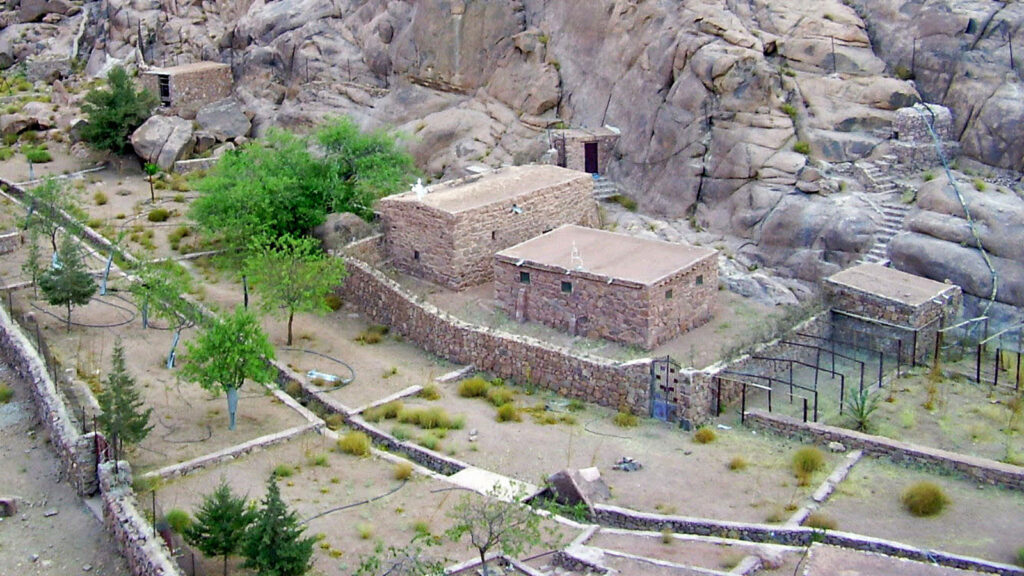
The interconnected hidden basins atop the Mount Sinai-Ras Safsafa range contain both intact and ruined chapels, hermit cells, and gardens, and lead to viewpoints perched above steep gullies overlooking different parts of the surrounding landscape. One of these offers a picture-perfect bird’s-eye view of the Monastery of St. Catherine. You can easily spend a full day exploring the range before climbing to the summit of Mount Sinai for a peaceful sunset. Afterward, you can either descend to town before darkness falls or spend the night in a Bedouin garden in a nearby valley and visit another monastery the following day. It is actually easier than the direct summit climb, as the ascent is divided into three stages with flat sections and rest stops in between.
The Highest Chapel in Egypt
2 days, difficult
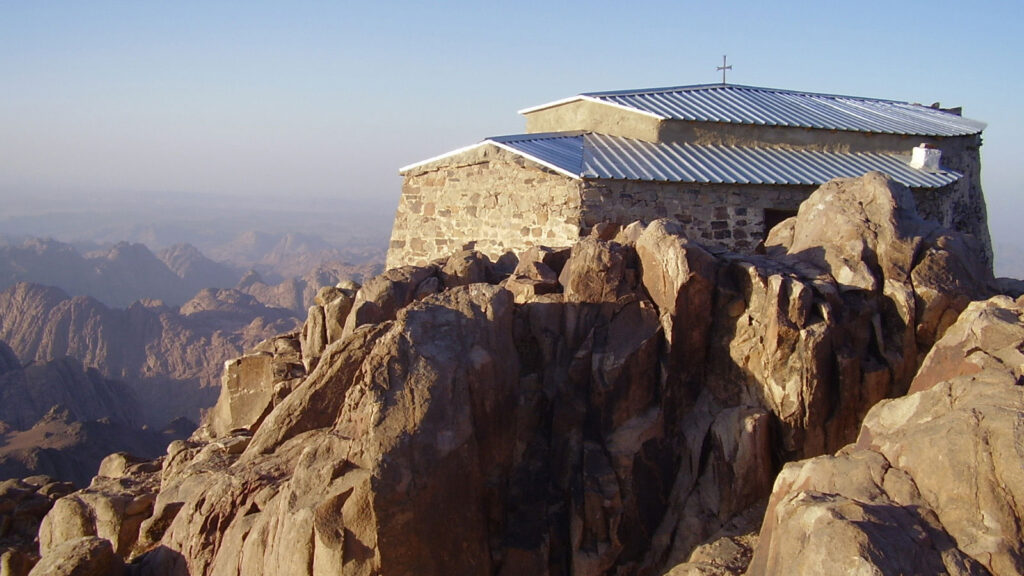
Located on the summit of Mount Catherine, Egypt’s highest mountain, the chapel dedicated to Saint Catherine overlooks the rugged interior of South Sinai. Mount Sinai lies just below, but unlike that famous pilgrimage site, here you can enjoy the peace and solitude of the high mountains. There is a simple shelter below the chapel where we may spend the night, or alternatively descend to a nearby mountain garden for more comfortable accommodation (recommended in colder weather). Standing at the highest point in Egypt, the summit is reached by a long, steep, and demanding climb, although no scrambling or technical difficulties are involved.
Chapel of St John Climacos & Monastery of Kozmas and Damianos
1-day, easy-moderate
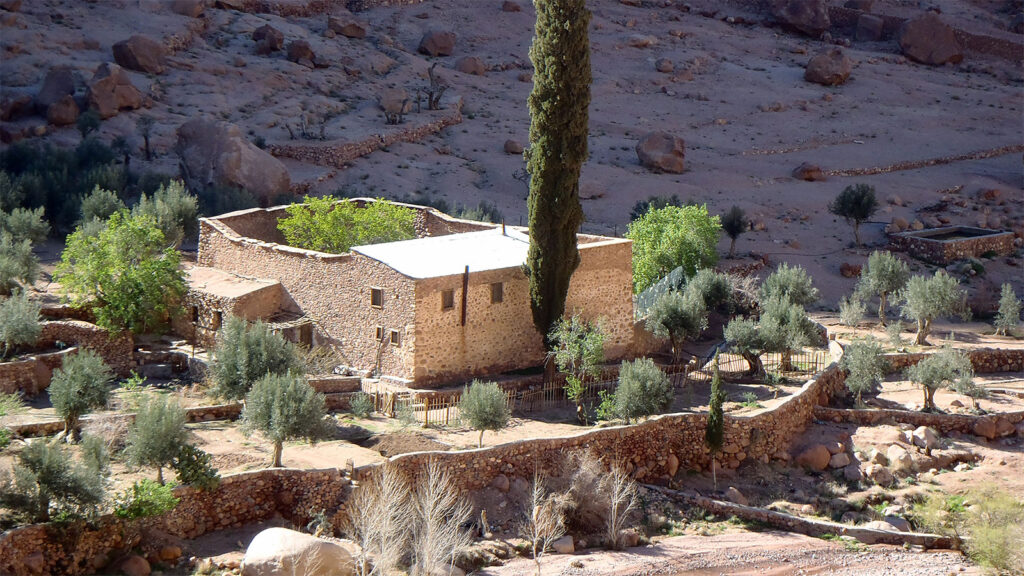
We begin by visiting the Chapel of St. John Klimakos, located beside the saint’s hermit cave in Wadi Itlah, reached by a gentle downhill walk from town. We then retrace our steps, now gradually climbing, until we reach Wadi Tala. Along the way, we pass several large orchards and olive groves belonging to the Monastery. In the last of these stands the Monastery of Saints Kosmas and Damianos, nestled among massive granite boulders. A little farther on, we stop to rest in a Bedouin garden before tackling a short but steep pass. From the top, a panoramic view opens up over the entire town, with the Monastery of the Holy Apostles below and Mount Sinai rising in the background.
Wadi Feiran – The Biblical Rephidim
1-day, road trip
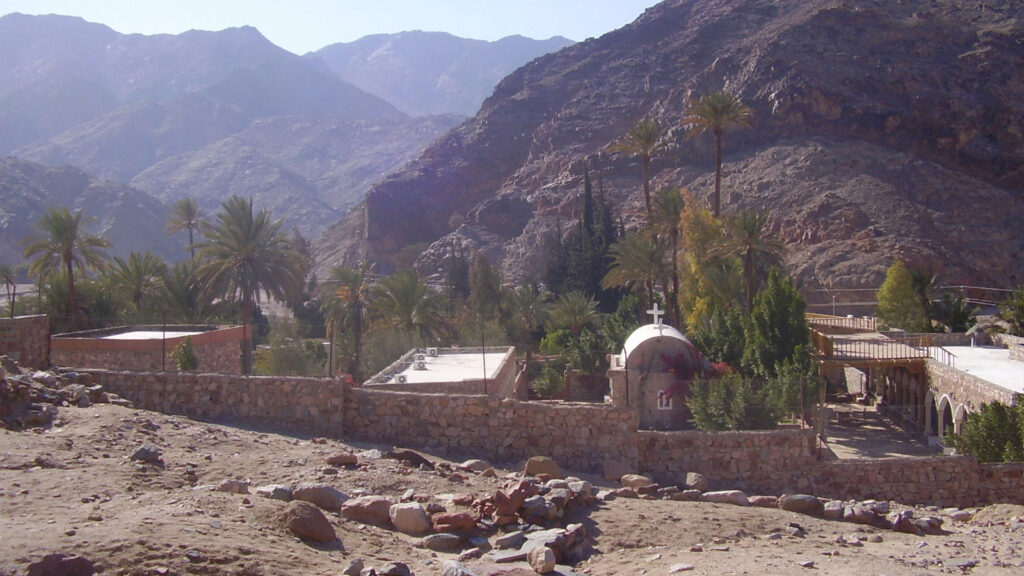
Wadi Feiran is the largest oasis in South Sinai, stretching for about 6 kilometers along the winding main road. Several important cultural and historical sites are located within the oasis, all close to one another and to the commercial center. These include the Convent of Pharan (Deir al-Banat), the ruins of the ancient basilica, Jebel Tahouna, and numerous hermit caves. The impressive Jebel Serbal massif dominates the skyline above the oasis.
Bustan el Birka – Byzantine Monastic Ruins
1-day, moderate
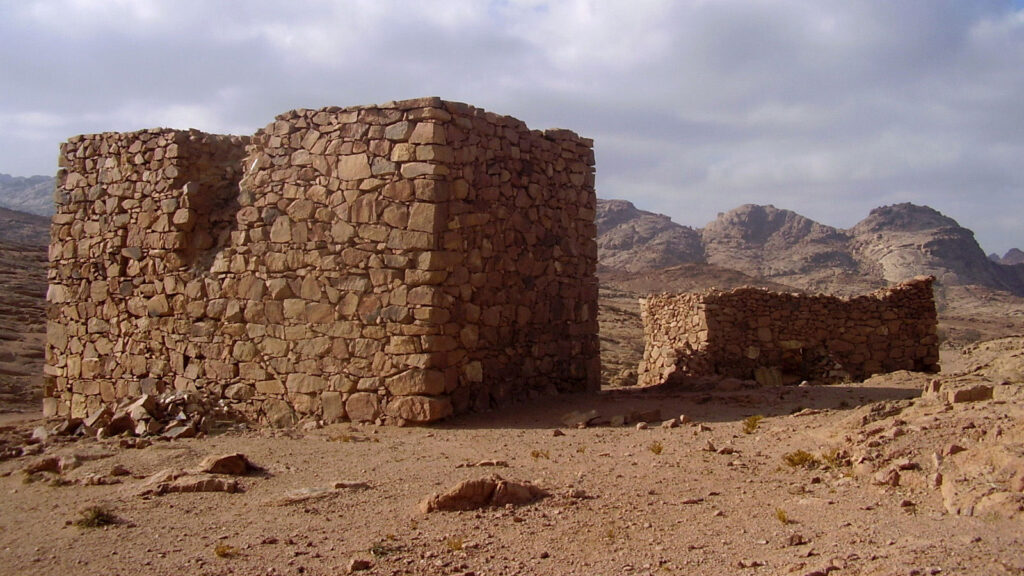
There are many ancient Byzantine ruins scattered across the basin of Wadi Freah, particularly in an area known as Bustan el Birka. The site can only be reached on foot or by camel, after a fairly short but steep climb. It is best appreciated by those with an interest in archaeology, as the ruins do not look dramatically different from traditional Bedouin structures. This is understandable, as the Bedouin learned many building techniques from the Byzantine settlers and used the same materials—stone and earth. There are, however, several distinguishing features that our guide should be able to point out.
Wadi Rahaba & the Monastery of Rumhan
1 or 2 days, moderate
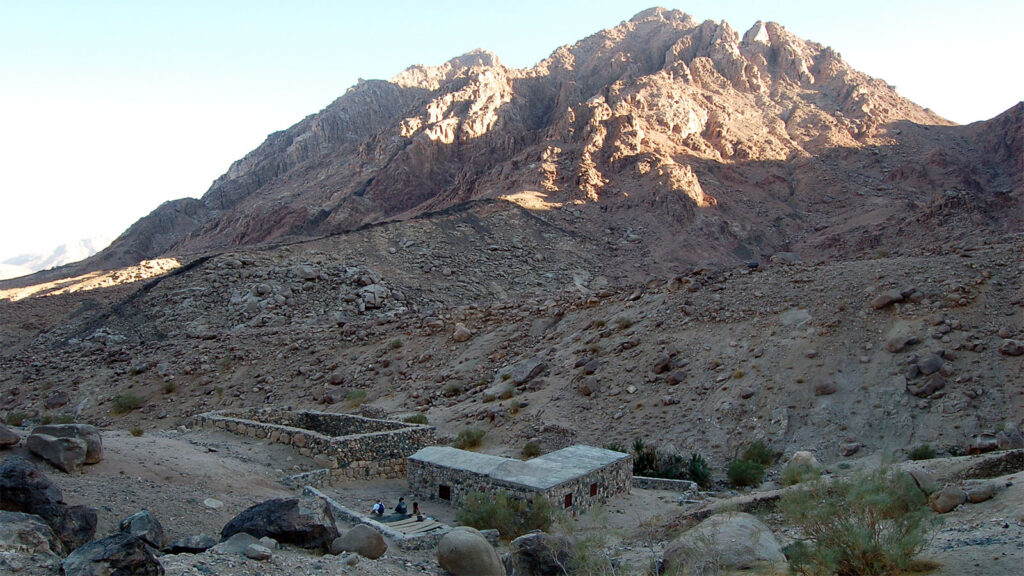
The first part of the trip is by vehicle, passing through the area known as Wadi Rahaba. Here, much like in Bustan el Birka, there are numerous Byzantine monastic ruins, some of them in remarkably good condition. From the end of the dirt track, we continue on foot across fairly open terrain before descending into a steep gully. After about 40 minutes of descent, we reach Wadi Rumhan and the ruins of the monastery. Next to them stands a newer building constructed by the Monastery of St. Catherine, where visiting monks and guests can stay overnight. The return follows the same route, although this time it is all uphill. Camels can be arranged, but this must be organized in advance. There is also the option of spending the night in a simple Bedouin garden or campsite and, for those feeling energetic, climbing Egypt’s second-highest peak, Jebel Umm Shomar.
ACTIVITIES: Water Sports > Around Town > Mount Sinai Hike > Christian Sites > Hiking & Trekking > Walking & Camel Safaris > 4×4 Desert Safaris > Rock Climbing > Body, Mind & Spirit