guided Jebel Abbas Basha day hike
A guided Jebel Abbas Basha day hike is a full-day mountain experience near Saint Catherine in South Sinai, combining rocky desert trails, wide views across the Sinai highlands and the remains of an unfinished nineteenth-century palace. The route is generally suitable for active travelers who are comfortable with sustained uphill walking on uneven ground.
With local route knowledge and careful preparation, sinaicompass can help visitors experience this quieter side of Egypt beyond the country’s famous archaeological sites and Red Sea resorts. Instead of joining a heavily visited summit trail, hikers enter a remote landscape of granite mountains, traditional Bedouin paths and sheltered valleys.
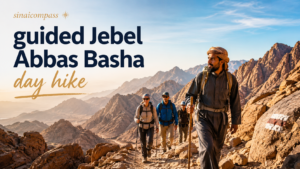
Jebel Abbas Basha hike at a glance
Jebel Abbas Basha, sometimes called Mount Abbas Basha or Jabal Abbas, rises within the mountainous landscape surrounding Saint Catherine. Its summit area is known for the stone foundations and walls of a palace commissioned during the rule of Abbas I of Egypt but never completed.
| Trip detail | What to expect |
|---|---|
| Location | Sinai highlands near Saint Catherine, South Sinai |
| Experience type | Guided mountain day hike |
| Difficulty | Moderate to challenging, depending on route and fitness |
| Terrain | Rocky paths, gradual climbs, steeper mountain sections and exposed ground |
| Duration | A full-day outing; walking time varies by route, weather and group pace |
| Main highlights | Palace ruins, mountain panoramas, desert wadis and Bedouin trail knowledge |
| Best suited to | Active travelers, photographers, history enthusiasts and nature lovers |
| Recommended preparation | Good footwear, layered clothing, sun protection and sufficient water |
What makes Jebel Abbas Basha different?
The attraction of Jebel Abbas Basha comes from the combination of landscape and history. Many mountain walks offer impressive views, but this summit also contains the remains of an ambitious building project that was left unfinished more than a century and a half ago.
The scattered stonework gives the summit a distinctive atmosphere. Hikers can stand beside the remains of walls and foundations while looking across a broad network of rugged peaks and dry valleys. The contrast between the abandoned structure and the surrounding wilderness makes the destination especially interesting for travelers who want more than a simple viewpoint.
Jebel Abbas Basha is also generally quieter than the well-known Mount Sinai sunrise route. This does not mean hikers will always have the mountain to themselves, but the trail usually feels more remote and less ceremonial. The day is focused on movement, landscape, local knowledge and the changing character of the high desert.
The story of the unfinished Abbas Pasha palace
The ruins on the mountain are associated with Abbas I, who governed Egypt during the middle of the nineteenth century. Construction of a mountain residence began in the early 1850s, but the project stopped after his death in 1854.
Only parts of the proposed complex were completed. What remains today is not a furnished palace or conventional archaeological attraction. Visitors encounter sections of stone walls, foundations, openings and building materials exposed to the mountain climate.
This unfinished state is part of the site’s appeal. It allows hikers to read the landscape and imagine the scale of the original plan without entering a restored tourism complex. A knowledgeable guide can explain which sections belong to the historical project and help separate documented history from the legends that have developed around the mountain.
Jebel Abbas Basha is not simply a summit with ruins. It is a place where nineteenth-century ambition, Bedouin mountain knowledge and the physical scale of Sinai meet in one landscape.
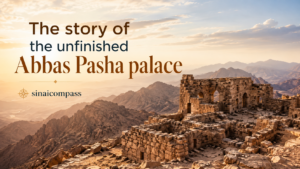
What happens during a guided Jebel Abbas Basha day hike?
A typical day begins in or near Saint Catherine, although the precise meeting point and trailhead depend on the route selected by the guide. The group normally reviews weather conditions, equipment, water and the expected pace before entering the mountains.
The walking route may pass through open wadis, narrow mountain corridors, Bedouin garden areas or elevated plateaus. Because several approaches and connecting trails exist, the itinerary should not be treated as a single fixed path. Local conditions may require a guide to adjust the ascent, descent or rest points.
1. Meeting the guide and checking equipment
Before the walk begins, hikers should confirm that they have suitable shoes, sun protection, warm layers, food, water and any personal medication. This is also the time to inform the guide about previous hiking experience, injuries or concerns about steep ground.
2. Walking through the lower valleys
The first part of the route introduces the mountain environment gradually. Dry valleys provide access between the surrounding peaks, while granite formations create a constantly changing landscape. Depending on the season, sheltered areas may contain small gardens or signs of traditional land use.
3. Beginning the main ascent
The trail becomes more demanding as it gains elevation. Hikers should expect irregular stone, loose sections and periods of continuous uphill walking. The hike is not normally described as a technical climb, but balance, stamina and concentration remain important.
4. Reaching the palace ruins
Near the upper section of the mountain, the historical stonework becomes visible. The guide can select a safe resting place and provide context about the site without encouraging visitors to climb unstable walls or disturb loose stones.
5. Descending to Saint Catherine
The descent may follow the same approach or use a different connecting trail. Downhill walking can place more pressure on the knees, so a controlled pace is preferable. Trekking poles may help some hikers maintain stability on loose or uneven surfaces.
How difficult is the Jebel Abbas Basha hike?
The Jebel Abbas Basha hike is generally moderate to challenging. It requires several hours of walking, a substantial mountain ascent and confidence on rocky, uneven terrain. It is more demanding than a short valley walk but does not usually require specialist climbing equipment when completed on a standard hiking route.
Difficulty is affected by more than distance. Strong sun, cold wind, loose stones, elevation, the weight of a backpack and the group’s pace can all change how the walk feels. A traveler who regularly walks on hills may find the day manageable, while someone used only to flat city walking may find the ascent tiring.
The experience is most suitable for visitors who can remain active for most of a day and recover comfortably after repeated uphill sections. Travelers with knee, ankle, heart or respiratory concerns should obtain appropriate medical advice before committing to the route.
Why a local guide matters in the Sinai highlands
A local guide contributes far more than basic directions. Mountain paths around Saint Catherine can divide into smaller routes that are difficult for a first-time visitor to interpret. Phone signals and digital maps should not be treated as substitutes for knowledge of the terrain.
Guides from the local Jebeliya Bedouin community understand how routes connect through wadis, passes, gardens and mountain plateaus. They can also evaluate wind, cloud, heat and the possibility of changing conditions before deciding whether the planned itinerary remains appropriate.
A guide can help with:
- Selecting a route suitable for the group’s ability.
- Maintaining a realistic and sustainable walking pace.
- Identifying safe places for breaks and meals.
- Explaining local place names and mountain history.
- Responding when weather or trail conditions change.
- Reducing unnecessary impact on gardens, water sources and historical remains.
Guided travel also supports local livelihoods and keeps knowledge connected to the community that has used these trails for generations.
Why include this hike in a wider Egypt itinerary?
Many international visitors associate Egypt primarily with ancient temples, pyramids, Nile cruises and Red Sea beaches. A South Sinai mountain hike adds a very different environment to the journey.
Saint Catherine offers high desert scenery, cooler mountain conditions and a strong connection between natural and cultural heritage. Visitors can combine the hike with time in Dahab, Sharm El Sheikh or other parts of South Sinai, provided that transport and overnight arrangements are planned realistically.
The experience is especially valuable for travelers who want to:
- Add an active outdoor day to a cultural holiday.
- Explore a less crowded mountain destination.
- Learn about Bedouin relationships with the Sinai landscape.
- Photograph peaks, valleys and historic ruins.
- Experience a side of Egypt that differs from the Nile Valley.
When is the best time to hike Jebel Abbas Basha?
Spring and autumn often provide the most comfortable balance of temperature and daylight for hiking in the Sinai highlands. However, conditions can vary significantly, and every booking should be assessed using a current local forecast. see also.
Summer hiking can involve strong sunlight and exposed heat, particularly during the middle of the day. An early departure, adequate water and sun protection become especially important.
Winter can bring cold wind and temperatures that feel dramatically lower than those at the Red Sea coast. Snow, frost or ice may occasionally affect high mountain areas. Travelers arriving from a warm resort should not assume that beach clothing will be sufficient in Saint Catherine.
Rain is uncommon but can be serious when it occurs. Water may move quickly through wadis, so local guidance and route changes should always take priority over a fixed itinerary.
What to pack for the hike
Pack for a mountain environment rather than a conventional sightseeing excursion. Every item should have a practical purpose, but avoiding an unnecessarily heavy backpack is equally important.
- Supportive hiking shoes with reliable grip.
- Comfortable walking clothes that allow free movement.
- A warm layer and wind-resistant outer layer.
- A sun hat, sunglasses and sunscreen.
- Sufficient drinking water based on the guide’s advice.
- Energy-rich snacks or a packed meal.
- A small personal first-aid kit and required medication.
- A charged phone and portable power bank.
- A headlamp in case the itinerary extends toward low light.
- Trekking poles when additional downhill support is useful.
- A reusable bag for carrying all waste back.
Do not rely on finding shops or dependable resupply points once the group has entered the mountain route. Food, water and essential personal items should be organized before departure.
Responsible hiking in Saint Catherine
The Saint Catherine mountain environment is visually rugged but ecologically sensitive. Plants grow slowly, water is limited and traditional gardens depend on careful use of natural resources. Visitors should behave as guests within both a protected landscape and a living cultural area.
- Follow established trails and the guide’s instructions.
- Carry out bottles, tissues, food packaging and all other waste.
- Do not remove stones, plants or pieces of historic structures.
- Avoid climbing on unstable palace walls.
- Ask before photographing local residents or private gardens.
- Keep noise low around camps, gardens and resting places.
- Use water carefully and avoid contaminating springs or wells.
Responsible behavior protects the experience for future hikers while showing respect for the people whose history and daily life are connected to these mountains.
Why plan the hike with sinaicompass?
Planning a mountain day requires coordination between guiding, transportation, start time, equipment, meals and the ability of the participants. sinaicompass provides travelers with a clear point of contact for discussing these elements before entering the Sinai highlands.
The main value of an organized experience is not simply being taken to a summit. It is having an itinerary that reflects the season, group size, fitness level and wider Egypt travel schedule.
Before confirming your guided hike, ask sinaicompass to clarify:
- The exact meeting location and planned trailhead.
- Expected walking time and difficulty.
- Whether the trip is private or shared.
- What transport is included.
- Whether food and water are provided.
- Which equipment travelers must bring.
- The procedure if weather makes the route unsuitable.
Clear answers allow travelers to prepare properly and avoid comparing tours only by price when the included services may be very different.
Common mistakes to avoid
Arriving directly after a long transfer
Starting a demanding hike after several hours on the road can reduce energy and concentration. Staying in Saint Catherine before the hike often makes an early departure more comfortable.
Wearing casual city shoes
Smooth trainers and fashion footwear provide limited support on loose rock. Shoes with grip and a stable sole are a safer choice.
Ignoring cold mountain weather
Conditions in Saint Catherine may be much cooler than coastal South Sinai. Always carry an additional layer, even when leaving a warm resort.
Walking too quickly at the beginning
A fast early pace can cause unnecessary fatigue before the main ascent. Start steadily, take short breaks and allow the guide to control the rhythm.
Assuming the route can never change
Weather, group fitness and trail conditions may require an alternative path. A flexible itinerary is a sign of responsible mountain planning, not poor organization.
Touching or climbing the palace remains
The ruins have been exposed to wind and weather for generations. Loose walls should be observed without climbing, moving stones or placing unnecessary pressure on the structure.
Is the guided Jebel Abbas Basha day hike right for you?
Choose this experience when you want a physically active day, enjoy quiet mountain landscapes and are interested in both natural and human history. It works particularly well for travelers who prefer a meaningful local route over a short commercial viewpoint stop.
A different Saint Catherine experience may be more suitable when you have limited mobility, dislike long uphill walks or have very little time between long road transfers. Families should discuss children’s ages and hiking experience with the organizer rather than assuming one route suits every group.
The most rewarding approach is to be honest about fitness and expectations. A carefully paced hike is more enjoyable than rushing toward the summit or selecting a difficult itinerary for status alone.
Final thoughts
A guided Jebel Abbas Basha day hike reveals a side of Egypt shaped by high mountains, historic ambition and living Bedouin knowledge. The journey offers more than panoramic photographs: it creates a gradual connection with the valleys, trails and stories surrounding Saint Catherine.
Good footwear, realistic fitness, flexible planning and an experienced local guide are central to a safe and enjoyable day. When these elements are in place, Jebel Abbas Basha can become one of the most memorable outdoor experiences in a wider Egypt itinerary.
Contact sinaicompass to discuss your travel dates, group size, starting location and hiking experience. A clearly planned itinerary is the logical next step toward exploring the palace ruins and mountain landscapes of Jebel Abbas Basha with confidence.
Frequently asked questions
1. Where is Jebel Abbas Basha?
Jebel Abbas Basha is located in the Sinai highlands near the town of Saint Catherine in South Sinai, Egypt.
2. How difficult is the guided Jebel Abbas Basha day hike?
It is generally a moderate-to-challenging hike involving sustained uphill walking and uneven rocky terrain.
3. How long does the hike take?
It is normally planned as a full-day experience. Exact walking time depends on the route, group pace and weather.
4. Do I need a guide for Jebel Abbas Basha?
A local guide is strongly recommended because routes can be difficult to interpret and conditions may change.
5. What is at the summit?
The summit area contains remains of an unfinished nineteenth-century palace associated with Abbas I of Egypt.
6. Is the hike suitable for beginners?
Fit beginners may complete it with preparation and a suitable pace, but it is not an easy introductory walk.
7. What shoes should I wear?
Wear supportive hiking shoes with good grip for rocky, loose and uneven mountain surfaces.
8. Can I hike Jebel Abbas Basha in winter?
Yes, when conditions are suitable, but hikers must prepare for cold wind and possible frost, snow or ice.
9. Can the hike be added to a Dahab or Sharm El Sheikh holiday?
Yes. It can be combined with a South Sinai itinerary, although transport and overnight arrangements should be planned carefully.
10. How do I book the hike with sinaicompass?
Contact sinaicompass with your dates, starting location, group size and hiking experience to discuss an appropriate itinerary.