private Wadi Tala and Wadi Itlah hiking tour
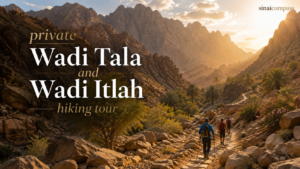
A private Wadi Tala and Wadi Itlah hiking tour offers a quieter way to experience the granite valleys, traditional gardens and Bedouin heritage surrounding Saint Catherine in South Sinai. Instead of following a large group toward a crowded summit, travelers can explore two connected low-wadi landscapes at a pace suited to their fitness, interests and available time.
Organized by Sinai Compass, the experience can be planned as a private day hike with local guidance, route adjustments and time for photography, rest stops and cultural details. It is particularly suitable for travelers who want to discover the natural side of Egypt beyond the Nile Valley, archaeological sites and Red Sea resorts.
What Is the Private Wadi Tala and Wadi Itlah Hiking Tour?
The tour is a guided walk through two valleys in the Saint Catherine mountain region: Wadi Tala, also written as Wadi Talaa or Wadi Al-Talaa, and Wadi Itlah. The valleys form part of a wider network of old paths used by local Bedouin communities, monks, gardeners and travelers moving between the mountain settlements.
Sinai Compass classifies Wadi Tala and Wadi Itlah among the “Low Wadis” that can be explored on a one-day hike. Although these routes are generally less demanding than a major summit climb, the ground remains naturally uneven, with loose stones, sandy sections, granite surfaces and occasional short ascents.
A private itinerary gives the guide more freedom to adapt the walking speed and route. The day may focus on scenery and photography, local plants, religious heritage, traditional orchards or a combination of these interests.
A Wadi Tala and Wadi Itlah hike is not simply a walk through an empty desert. It is a journey through a living mountain landscape shaped by water, agriculture, faith and Bedouin knowledge.
Quick Tour Overview
| Tour Feature | Planning Information |
|---|---|
| Location | Saint Catherine, South Sinai, Egypt |
| Main valleys | Wadi Tala and Wadi Itlah |
| Tour style | Private guided hiking experience |
| Typical format | One-day or extended half-day route |
| General difficulty | Easy to moderate, depending on the selected route |
| Terrain | Rocky tracks, sandy valley floors and uneven granite |
| Best suited to | Couples, solo travelers, families and small private groups |
| Guide | Local mountain guide arranged according to the itinerary |
| Possible highlights | Bedouin gardens, orchards, rock formations and historic religious sites |
| Final route | Confirmed according to weather, access and group ability |
Where Are Wadi Tala and Wadi Itlah?
Wadi Tala and Wadi Itlah lie close to the inland town of Saint Catherine in Egypt’s Sinai Peninsula. Saint Catherine sits within a high mountain landscape known for narrow valleys, rugged granite peaks, historic paths and small cultivated gardens protected by stone walls.
The wider Saint Catherine area is internationally recognized for its cultural and religious importance. It includes Mount Sinai and Saint Catherine’s Monastery, while the surrounding protectorate preserves one of Egypt’s most distinctive mountain environments.
The valleys are close enough to Saint Catherine to work well as a day-hiking experience, but they feel considerably more remote once travelers leave the town behind. Depending on the chosen direction, a guide may begin near the town, enter Wadi Itlah and then continue gradually toward Wadi Tala, or follow the connection in reverse.
Understanding the Different Wadi Tala Names
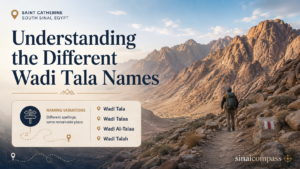
Travelers may encounter several spellings, including Wadi Tala, Wadi Talaa, Wadi Al-Talaa and Wadi Talah. These spelling differences usually result from transliterating Arabic names into English.
Visitors should also confirm that the proposed itinerary refers to the lower Wadi Tala and Wadi Itlah route. Wadi Tala Kibira is a different, steeper mountain connection that may appear in descriptions of longer or more demanding treks. Asking for a clear route outline before booking prevents confusion.
What Will You See During the Hike?
The scenery changes throughout the route. Some sections pass beneath steep granite walls, while others open into broader valley floors with gardens, fruit trees and signs of traditional settlement. The exact experience changes with the season, recent weather and the route selected by the guide.
Granite Canyons and Mountain Passages
Much of Saint Catherine’s visual character comes from its rugged granite formations. The valleys contain rounded boulders, weathered cliffs, narrow passages and natural channels created by water moving through the mountains over long periods.
These formations create excellent opportunities for landscape photography. A private tour allows photographers to pause when the light reaches the rock walls or when the route opens toward a wider mountain view.
Traditional Bedouin Gardens
Small gardens and orchards are among the most memorable features of the Saint Catherine valleys. Stone walls help define cultivated areas where local families and religious communities have grown olives, almonds, apricots, figs and other plants suited to the mountain environment.
These gardens should be treated as private and culturally important spaces. Visitors should follow the guide’s instructions, avoid entering cultivated areas without permission and never pick fruit or plants unless specifically invited.
Religious and Historical Heritage
Depending on the route and current access, the walk may pass heritage associated with the Christian history of Saint Catherine. Wadi Itlah is connected with the hermitage tradition of Saint John Climacus, while Wadi Tala contains the small Monastery of Saints Kosmas and Damianos among orchards and granite boulders.
These sites are not simply sightseeing stops. They form part of a landscape that has supported religious retreat, local agriculture and Bedouin life for generations. Access should always be respectful and may depend on opening arrangements or local permission.
Desert Plants and Seasonal Water
The valleys support vegetation that may surprise visitors who imagine Sinai as a completely barren desert. Herbs, shrubs, olive trees and cultivated plants appear between the rocks and gardens.
After rain or snowmelt, water may collect or move through some channels. These conditions can create beautiful scenes, but they can also change route safety. Waterfalls and pools are seasonal features and should never be presented as guaranteed parts of every hike.
Why Choose a Private Hiking Tour?
A private tour provides flexibility that is difficult to achieve on a fixed group departure. The guide can respond to the hikers’ pace, photography interests, energy level and preferred stopping times.
- Flexible pacing: Walk steadily without needing to match a large mixed group.
- Personal route planning: Adjust the hike to suit beginners or more experienced walkers.
- More guide interaction: Ask questions about the landscape, plants and local traditions.
- Better photography opportunities: Pause at viewpoints and interesting rock formations.
- Greater privacy: Enjoy the valleys with a partner, family or selected travel companions.
- Practical adjustments: Modify rest stops when weather or energy levels change.
Private does not mean completely unrestricted. Routes may still be influenced by local regulations, weather, security procedures, protected-area rules and the guide’s safety judgment.
How Difficult Is the Wadi Tala and Wadi Itlah Hike?
The combined hike is generally considered easier than a major Saint Catherine summit, but it still requires balance, comfortable walking fitness and suitable footwear.
The route may include loose rocks, uneven valley floors, short climbs and sections where hikers step across granite surfaces. The difficulty changes according to the starting point, final destination, weather and whether extra side routes are added.
Active beginners can often enjoy a carefully selected version of the hike. However, travelers with knee, ankle, balance or mobility concerns should discuss these issues with Sinai Compass before confirming the tour.
Who Is This Tour Suitable For?
- Travelers comfortable walking for several hours.
- Couples seeking a private outdoor experience.
- Solo travelers who prefer guided mountain exploration.
- Families with older children accustomed to uneven ground.
- Photographers interested in desert landscapes and local heritage.
- Visitors who want an alternative to a summit sunrise hike.
- Travelers staying in Saint Catherine, Dahab or Sharm El Sheikh.
The hike may not be appropriate for very young children, people wearing unsuitable footwear or anyone who cannot walk confidently over rocky terrain.
How Long Does the Tour Take?
Most private Wadi Tala and Wadi Itlah itineraries are planned as a day experience, but the exact walking time depends on the selected trail and stopping schedule.
A shorter itinerary may focus on the most accessible parts of the two valleys. A longer route can include additional heritage points, gardens, lunch stops or connected paths. Photography, conversations with the guide and the group’s fitness can also affect the duration.
Do not plan an immediate fixed appointment after the hike. Mountain travel may be affected by checkpoints, road conditions, weather or a necessary route adjustment. Sinai Compass should confirm the expected meeting and return times for the specific booking.
What a Typical Private Tour May Include
Inclusions vary by booking, so travelers should request written confirmation rather than assuming that every service is automatically provided. A typical itinerary may follow these steps:
- Meeting or transfer: Meet in Saint Catherine or use a pre-arranged transfer from another South Sinai destination.
- Guide introduction: Meet the local guide and discuss the day’s route.
- Safety briefing: Review weather, terrain, communication and walking expectations.
- Enter the valley system: Begin through Wadi Itlah, Wadi Tala or another agreed starting point.
- Scenic and heritage stops: Pause at gardens, rock formations and accessible cultural sites.
- Rest or meal break: Stop in a suitable shaded area or agreed garden when included.
- Complete the route: Return to Saint Catherine or reach the arranged collection point.
Before paying, confirm whether the price includes transportation, guiding, meals, drinking water, protected-area charges, permits or other local fees.
Best Time for Hiking Wadi Tala and Wadi Itlah
Many international visitors prefer hiking in Saint Catherine from autumn through spring, when daytime walking conditions are generally more comfortable than during the hottest part of summer. However, mountain weather can change quickly in every season.
Autumn
Autumn can provide comfortable walking weather after the strongest summer heat. Early starts remain useful, and hikers should still carry sun protection and sufficient water.
Winter
Winter days can be clear and pleasant, but mornings, evenings and shaded valleys may feel very cold. Frost or occasional snow can affect the higher Saint Catherine region. Warm layers are essential even when coastal areas such as Dahab or Sharm El Sheikh feel mild.
Spring
Spring is popular for mountain walking because temperatures may be comfortable and some valleys appear greener after seasonal precipitation. Conditions still vary from year to year.
Summer
Summer hiking requires more careful timing. An early start, slower pace, sun protection and route selection become particularly important. Travelers who are not accustomed to desert heat should discuss alternatives with the guide.
Never enter a narrow valley when heavy rain or flash flooding is possible. The guide may postpone, shorten or replace the route when conditions are unsuitable.
What to Wear and Pack
Good preparation makes the hike safer and more comfortable. Travelers should pack for a mountain environment rather than a casual city walk.
- Broken-in hiking shoes or trail shoes with reliable grip.
- Comfortable trousers or flexible hiking clothing.
- Lightweight layers that can be added or removed.
- A warmer jacket during winter and colder months.
- A sun hat, sunglasses and sunscreen.
- Enough drinking water based on the guide’s recommendation.
- Simple energy snacks unless meals are confirmed.
- A compact daypack that leaves both hands free.
- Personal medication and basic blister care.
- A charged phone and portable power bank.
- A small bag for carrying all personal waste out of the valley.
Trekking poles may help hikers who are less confident on loose stones, although they are not essential for everyone.
Combining the Hike With a Wider Egypt Itinerary
This private hiking tour can add a completely different dimension to a journey through Egypt. Many visitors initially plan around Cairo, Luxor, Aswan and the Red Sea, yet Saint Catherine introduces them to a high-altitude desert environment with its own cultural traditions.
From Dahab
Dahab is a practical base for travelers combining diving, snorkeling or coastal relaxation with an inland mountain experience. Transportation should be arranged in advance because the hike begins around Saint Catherine rather than on the coast.
From Sharm El Sheikh
Visitors staying in Sharm El Sheikh can add Saint Catherine as a private excursion or overnight extension. An overnight stay may create a more relaxed schedule than attempting a long transfer and hike on the same day.
From Cairo
Travel from Cairo requires more planning because of the distance and road journey. It is usually better to treat Saint Catherine as part of a broader South Sinai itinerary instead of squeezing the hike into a rushed day trip. see also.
With Mount Sinai and Saint Catherine’s Monastery
The valley hike can be combined with Mount Sinai or the monastery on a wider itinerary, but travelers should avoid placing too many physically demanding activities into one day. Opening arrangements, access rules and rest requirements must be checked in advance.
Private Valley Hike or Mount Sinai Sunrise Tour?
| Experience | Wadi Tala and Wadi Itlah | Mount Sinai Sunrise Hike |
|---|---|---|
| Main focus | Valleys, gardens and local landscape | Summit and sunrise views |
| Walking style | Valley trails with flexible stops | Continuous mountain ascent and descent |
| Typical atmosphere | Quiet and exploratory | More focused on reaching the summit |
| Private customization | Highly adaptable | Limited by sunrise timing |
| Best for | Nature, heritage and photography | Summit achievement and panoramic views |
Travelers do not necessarily need to choose only one. The two experiences can complement each other when scheduled across separate days.
Responsible Hiking in the Saint Catherine Valleys
Responsible behavior protects the landscape and shows respect for the communities who live and work in the mountain region.
- Stay with the guide and follow the agreed trail.
- Carry all litter out of the valley.
- Do not remove rocks, herbs, flowers or archaeological material.
- Ask before entering a garden or private shelter.
- Request permission before photographing local residents.
- Avoid loud music in quiet natural or religious areas.
- Use water carefully and never contaminate springs or channels.
- Support locally provided guiding, food and handicrafts when appropriate.
Local guidance is especially valuable because paths may be unmarked and access conditions can change. A guide also helps visitors understand which places are public, private, sacred or environmentally sensitive.
Why Plan the Tour With Sinai Compass?
Sinai Compass already includes Wadi Tala and Wadi Itlah among its one-day hiking possibilities in the Saint Catherine High Mountain Region. This allows travelers to discuss the low-wadi route with a team familiar with the surrounding paths and possible connections.
The main advantage is itinerary planning rather than a one-size-fits-all package. Travelers can explain their fitness, group size, preferred travel dates and whether they are more interested in nature, photography, gardens or religious heritage.
Before confirming, ask Sinai Compass for the final walking route, expected duration, pickup arrangement, guide language, inclusions and cancellation conditions. Clear communication ensures that the experience matches the traveler’s expectations.
Common Mistakes to Avoid
- Assuming a valley walk is completely flat: The surface remains rocky and uneven.
- Wearing casual city shoes: Smooth soles provide poor grip on loose stones.
- Ignoring winter cold: Saint Catherine can feel much colder than nearby coastal resorts.
- Expecting guaranteed waterfalls: Flowing water depends on recent weather and seasonal conditions.
- Booking without checking inclusions: Transfers, meals and fees may vary between itineraries.
- Leaving the guide to explore alone: Trails may be unmarked and route conditions can change.
- Touching plants or entering gardens: Many cultivated spaces are private or environmentally sensitive.
- Planning an inflexible return time: Weather, roads and checkpoints may affect the schedule.
Final Planning Advice
The private Wadi Tala and Wadi Itlah hiking tour is a strong choice for visitors who want to experience a less familiar side of Egypt. It combines mountain scenery, traditional gardens, local knowledge and historic paths without requiring every traveler to complete a demanding summit climb.
Choose the route according to your actual fitness rather than the distance alone. Confirm the weather, wear reliable footwear and provide honest information about any mobility or health limitations. International travelers should also review current official travel guidance and local access requirements before visiting South Sinai.
For a route tailored to your schedule and walking level, contact Sinai Compass with your travel dates, number of participants, accommodation location and previous hiking experience. The team can then recommend an appropriate private Wadi Tala and Wadi Itlah itinerary and confirm the practical details before your trip.
Frequently Asked Questions
What is a private Wadi Tala and Wadi Itlah hiking tour?
It is a privately guided walk through two connected valleys near Saint Catherine, with the route and pace adjusted to the participating travelers.
Where are Wadi Tala and Wadi Itlah located?
Both valleys are located in the Saint Catherine mountain region of South Sinai, within reach of Saint Catherine town.
Is the Wadi Tala and Wadi Itlah hike difficult?
It is generally an easy-to-moderate mountain hike, but participants must be comfortable walking on rocks, sand and uneven granite surfaces.
Can beginners join the tour?
Active beginners can usually join a suitable version of the route after discussing their fitness and walking experience with the organizer.
How long does the tour take?
It is commonly planned as a one-day or extended half-day experience. Exact timing depends on the route, pace and number of stops.
What is the best time to hike in Saint Catherine?
Autumn, winter and spring are often preferred for cooler walking conditions, although forecasts must be checked before every departure.
Do I need a local guide?
Local guidance is strongly recommended because trails may be unmarked and access can depend on weather, local rules and protected areas.
What shoes should I wear?
Wear broken-in hiking or trail shoes with good grip. Sandals, smooth trainers and formal shoes are unsuitable.
Can I combine the hike with Mount Sinai?
Yes, but it is more comfortable to schedule the valley hike and Mount Sinai on separate days unless a suitable combined itinerary is arranged.
How can I book the tour with Sinai Compass?
Contact Sinai Compass with your dates, group size, accommodation location and fitness level to request a suitable route and confirmed quotation.