The interconnected hidden basins atop the Mount Sinai-Ras Safsafa range contain both intact and ruined chapels, hermit cells, and gardens, and lead to viewpoints perched above steep gullies overlooking different parts of the surrounding landscape. One of these offers a picture-perfect bird’s-eye view of the Monastery of St Catherine. You can easily spend a full day exploring the range before climbing to the summit of Mount Sinai for a peaceful sunset. Afterward, you can either descend to town before darkness falls or spend the night in a Bedouin garden in a nearby valley and visit another monastery the following day. It is actually easier than the direct summit climb, as the ascent is divided into three stages with flat sections and rest stops in between.
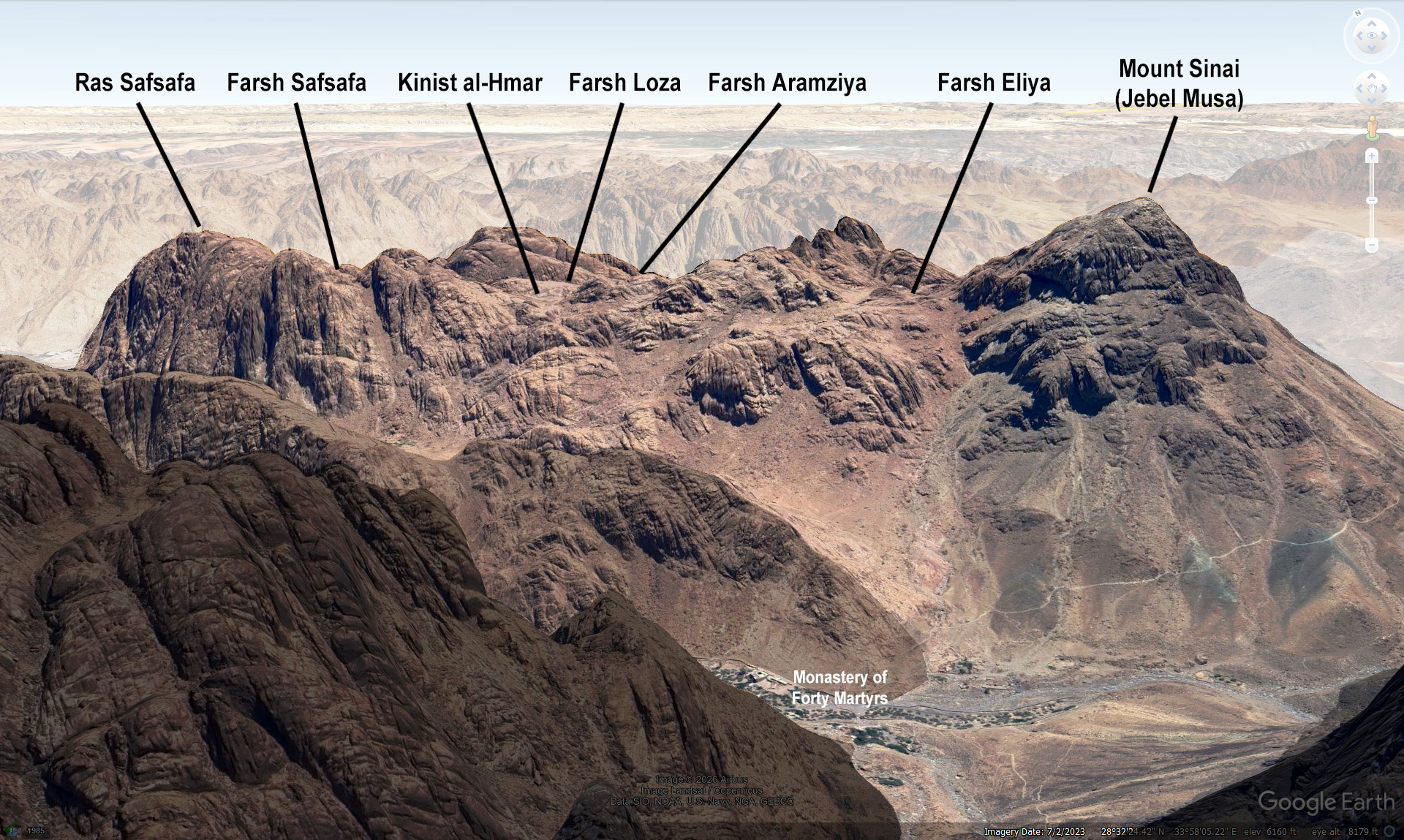
The above illustration was made using Google Earth, with the peaks and hidden basins marked on the image. You’ll find information and a photo about each place a little further down. Click on the Google Earth image to open it in full size in a new tab.
This tour is suitable for nature lovers, enthusiasts of historic sites, and those who are after a Christian experience. The difference is the way it is taken, with either more focus on the natural sights or the historic and religious sites. They overlap, anyway, but the guide will point out the relevant things according to group or individual interest. There will be breaks for rest and/or reflection, and the guide will prepare snacks, tea/coffee, and light lunch. Those staying overnight will also have a nice dinner and breakfast, and simple but beautiful accommodation with the view of the peak of Mount Sinai. Depending on group size and requirements, a camel to carry supplies might be needed.
Please note: Access to most Monastery properties (inside chapels, gardens) is not allowed without their permission which must be sought in advance, and is normally granted to Orthodox Christian pilgrims only. But you get a good look of them, as you can see in the photos below, all taken from outside.
Attractions (Day 1)
One day is enough to see most of the attractions, including the summit of Mount Sinai, but an easy second day can be added as an option. More information on this is provided after the description of the first day’s attractions.
Chapel of Saint Panteleimon / Kinist el Homar
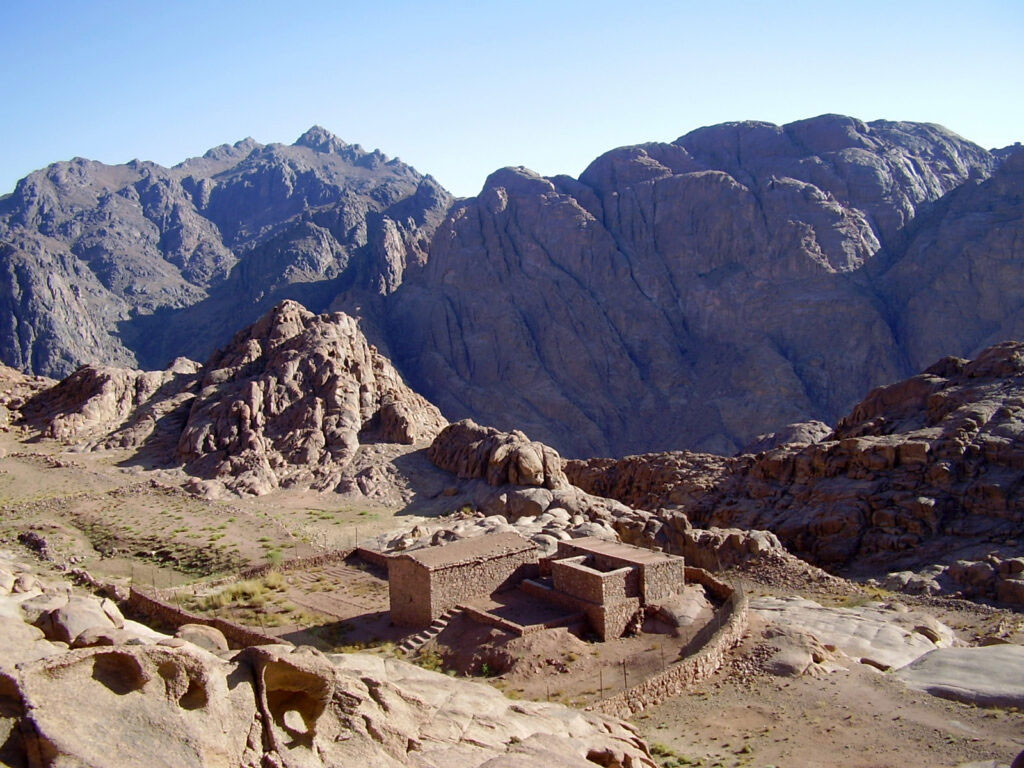
Nicknamed the “Chapel of the Donkey” (Arabic: Kinist el-Hmar), this small shrine honors St Panteleimon, the physician-martyr renowned for his healing miracles. It stands on one of the mountain’s approach terraces, a quiet stop where travelers pause before or after the strenuous climb. The Bedouin nickname recalls a local tale: a hermit lived here alone and each Sunday descended with his donkey to the monastery to attend the liturgy and carry back supplies. One day the donkey returned alone, and the people understood that the monk had died.
Farsh Safsafa & Chapel of the Holy Girdle of the Virgin Mary
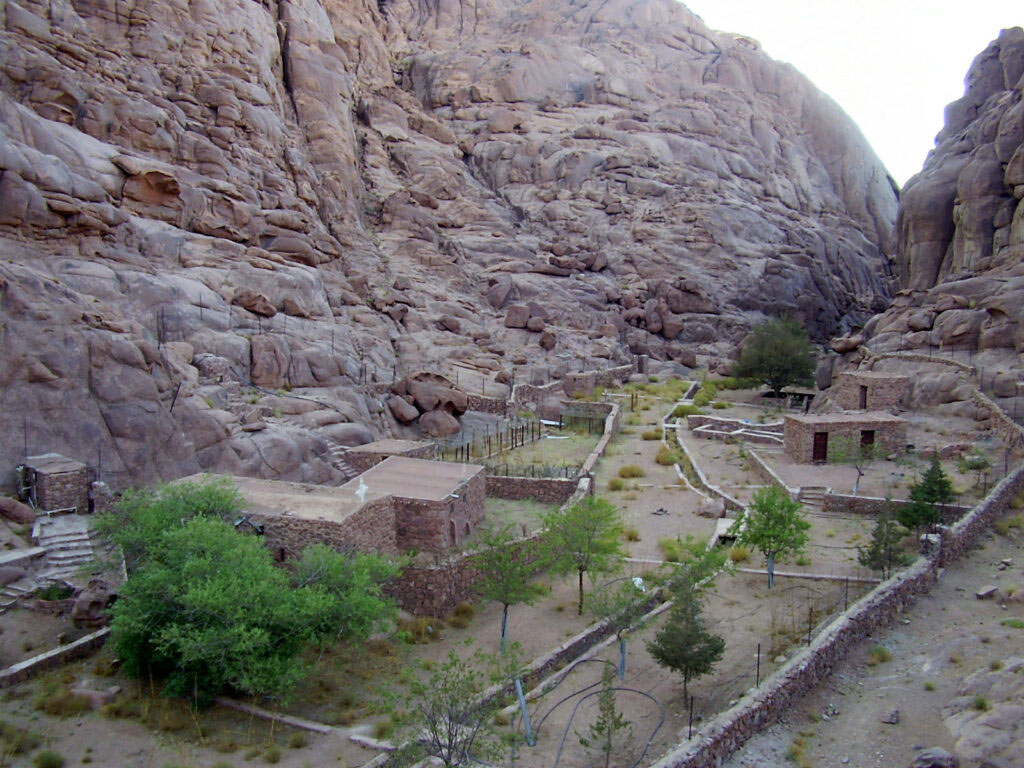
Tucked between steep granite walls lies a secluded basin known as Farsh Safsafa, with a small walled garden, a well, and a chapel. From the mouth of the basin, where the path drops into a steep gully, you can see the Nabi Harun area. The chapel is dedicated to the Holy Girdle of the Virgin Mary (the Theotokos), a long-standing Marian devotion in the Christian East, commemorated here in simple stone and prayer.
Farsh Loza & Chapel of Saint Gregory of Sinai
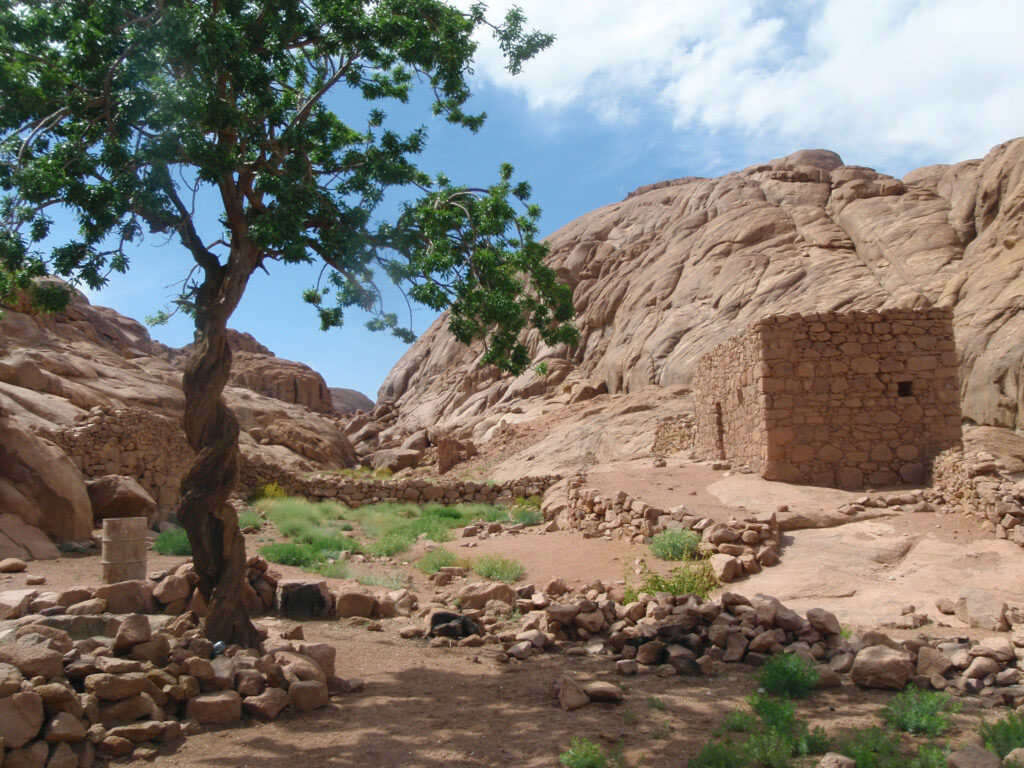
We visit another small basin called Farsh Loza, named for the twisted-trunk almond tree beside a modest chapel honoring Gregory of Sinai. He was a 14th-century monk and hesychast, a practitioner of inner stillness and continual prayer in the Orthodox tradition. The chapel has a tiny footprint and rough fieldstone masonry, much like the other hermit chapels scattered around Jebel Musa. In a nearby hidden basin stands the Chapel of St Anne.
Farsh Aramziya & Chapel of Saint John the Baptist
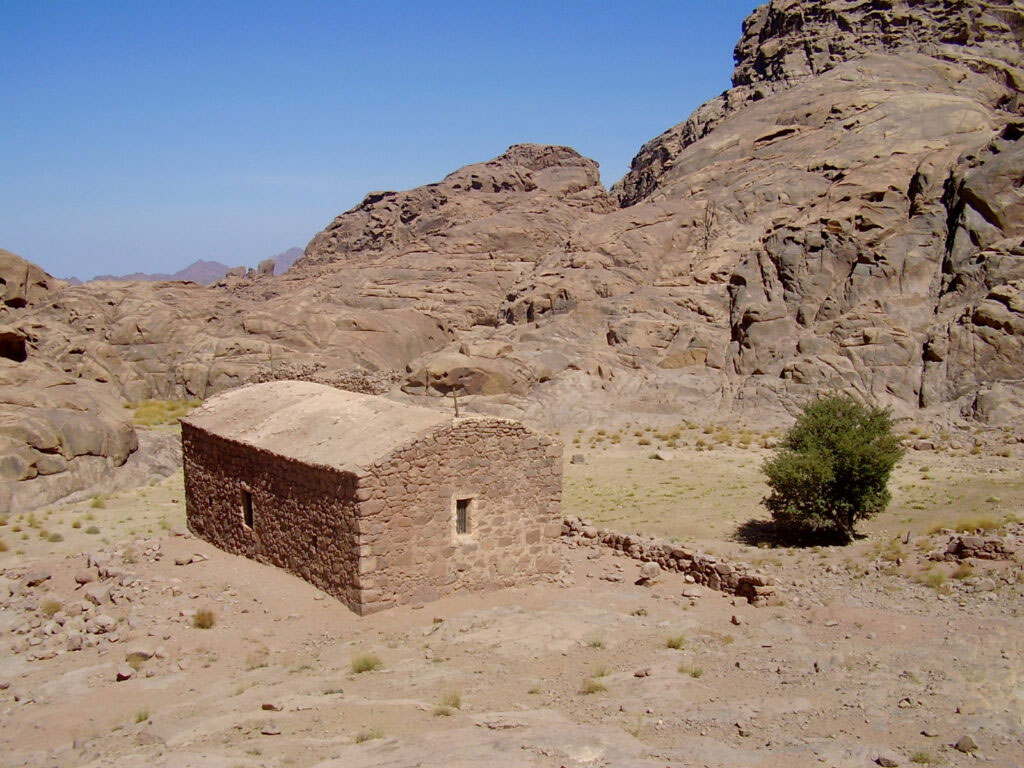
A short detour off the main path reaches a hidden terrace, Farsh al-Aramziya, also known as Farsh Zahrour, named for the Sinai hawthorn (Crataegus sinaica) found in the basin. Here stands a small stone chapel dedicated to St John the Baptist (“St John the Forerunner”). The site exemplifies Sinai’s network of hermitages: chapels tucked onto rocky terraces that catch a little soil, water, and shelter. The masonry is simple, likely rebuilt over time, but the dedication and setting suit the area’s solitary character, where scripture is read, prayers are chanted, and watch is kept over the valleys below.
View of Monastery
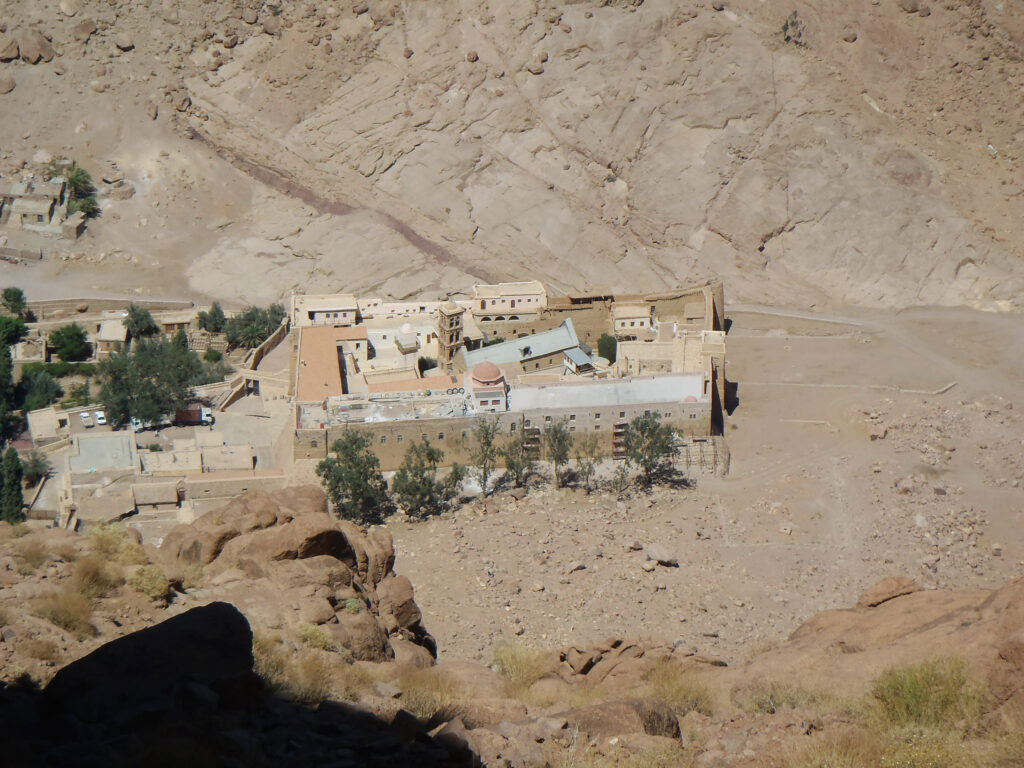
At the edge of the Farsh al-Aramziya basin, at the top of a narrow gully dropping steeply into Wadi al-Deir, you can enjoy a spectacular view of St Catherine’s Monastery. There is also a large dam and reservoir in the area that protects the monastery from flash floods while retaining water for use.
The Steps of Repentance
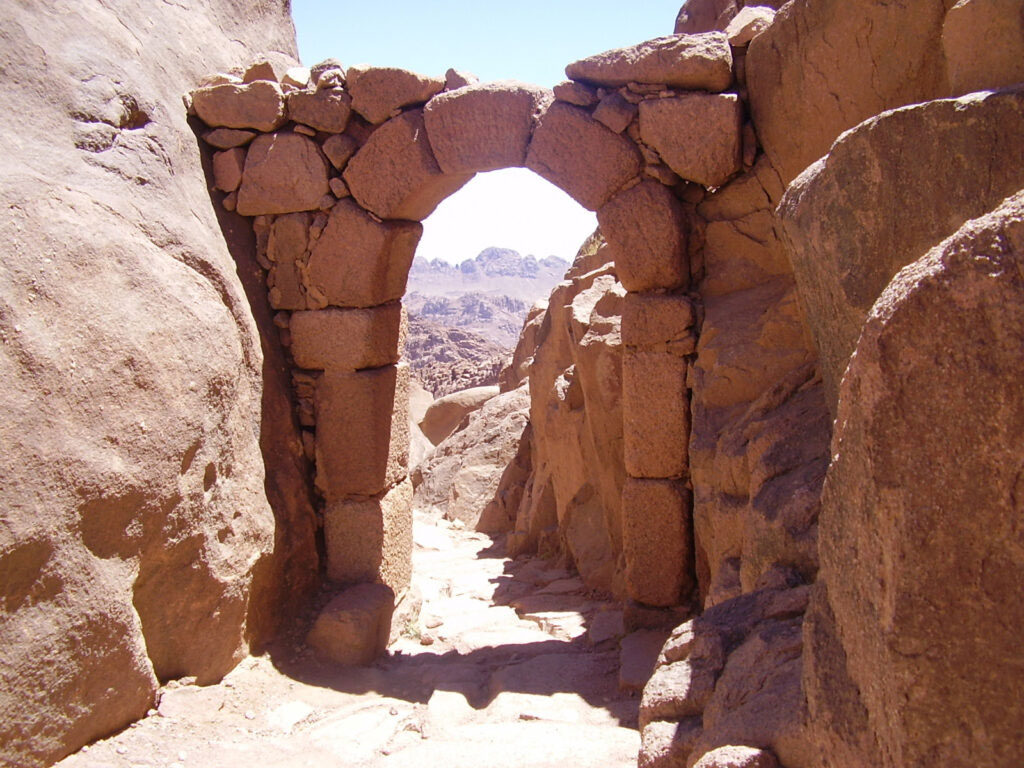
From the Monastery of St. Catherine to the summit of Mount Sinai, the traditional pilgrims’ route follows the Steps of Repentance. To Elijah’s Basin, there are roughly 3,000 stone steps, followed by another 750 steps to the summit, making about 3,750 in total. Along the ascent, pilgrims passed two gates and a small chapel, landmarks of this ancient route. Tradition holds that the stairway was completed in the 6th century, when monks carved and laid the steps as acts of penance on their way to the holy peak. We will not follow the Steps of Repentance themselves, but we can see the upper gate from our route.
Elijah’s Basin / Farsh Eliya
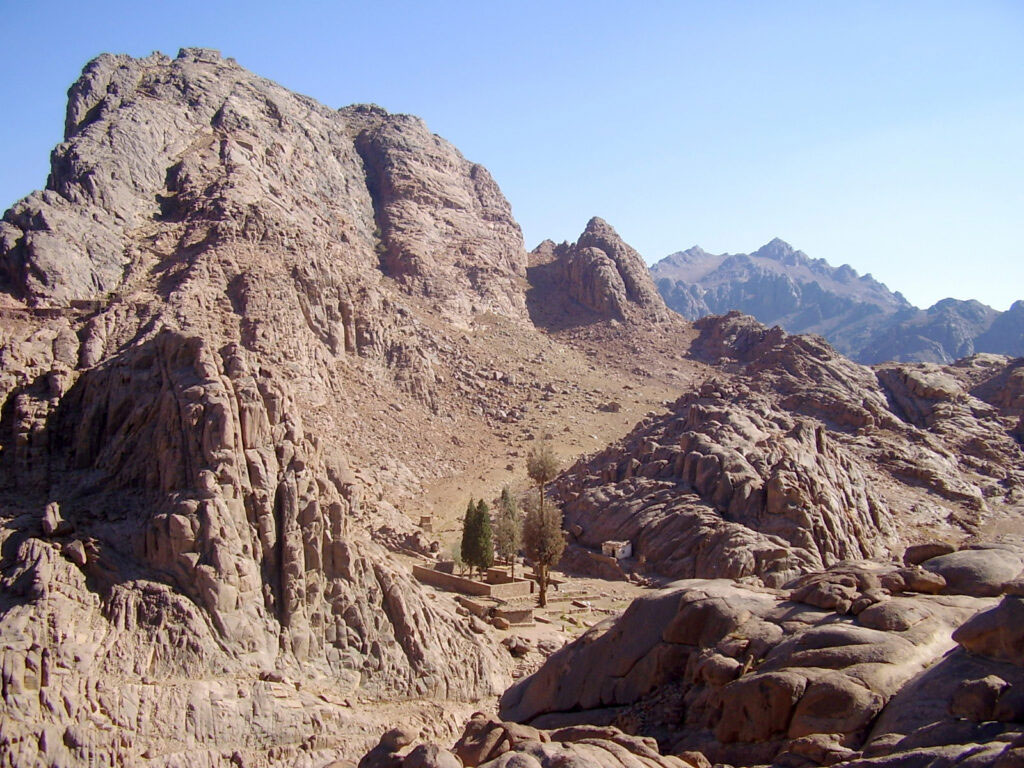
Elijah’s Basin (Farsh Eliya) is a natural terrace situated below the summit of Jebel Musa, serving as a resting and gathering place for pilgrims making the ascent. Tradition holds that the prophet Elijah sought refuge here, giving the site its name. The basin contains several chapels and a church, including the Chapel of St Marina the Virgin, the Church of Elijah, and the Chapel of St Stephen of Sinai. Its open space, access to water, and relatively flat ground made it a practical encampment site for monks and travelers, while its religious associations have made it an integral stop on the sacred route to the summit.
Mt. Sinai / Jebel Musa
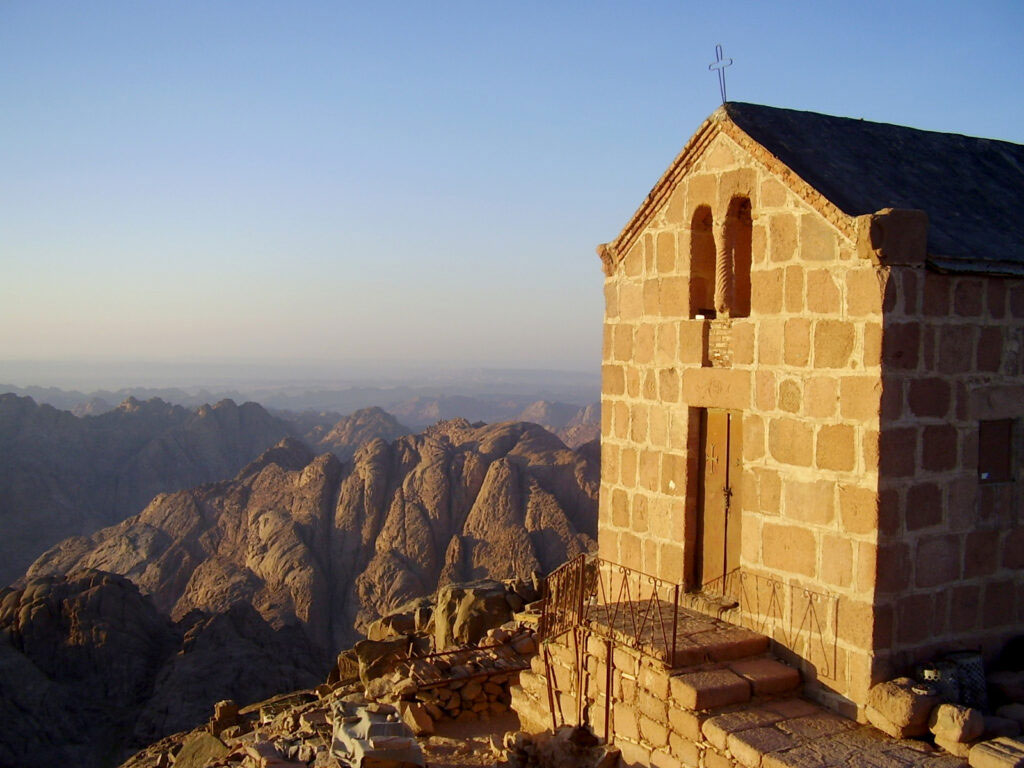
The summit of Jebel Musa, rising 2,285 meters (7,497 ft), is revered as the traditional location of Mount Sinai, where Moses received the Ten Commandments. At the peak stands the Chapel of the Holy Trinity, a small structure rebuilt in the 20th century on earlier Byzantine foundations, alongside a modest mosque. Visitors ascend by the Camel Path to greet the sunrise or sunset from the summit. The breathtaking panorama of rugged granite peaks and desert plains adds to the mountain’s aura.
Attractions (Day 2)
The overnight stay is optional, but it is a pleasant way to finish the walk and experience the atmosphere of a Bedouin garden. Accommodation is simple, but the garden is beautiful and offers excellent views of Mount Sinai and the Monastery of the Forty Martyrs. A good dinner is provided, usually consisting of chicken, rice, side dishes, salad, and drinks, followed by a hearty breakfast the next morning. The morning is spent relaxing and exploring the surroundings, including a stop at the Monastery of the Forty Martyrs. We then return either to town or to the Monastery of St Catherine. The destination is up to the visitors, but should be agreed upon before the hike begins. In either case, there is a short climb at the start, followed by a mostly downhill walk that is not particularly long.
Late Ramadan’s Garden
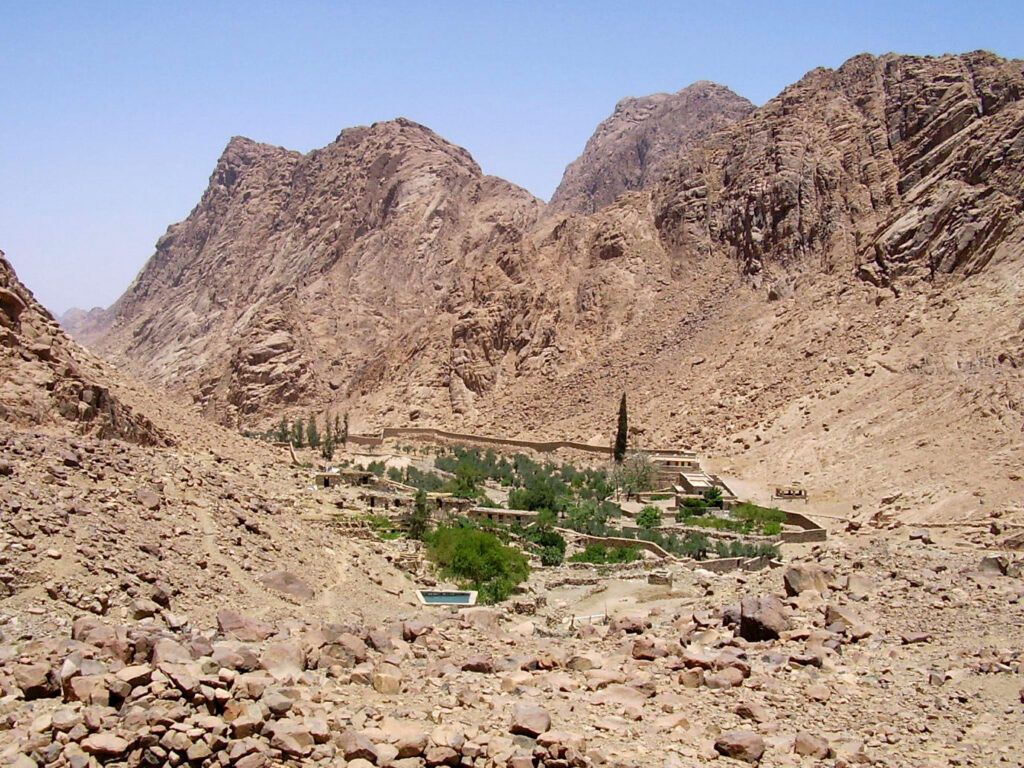
Located in a valley separating Mount Sinai and Mount Catherine, this is the most beautiful Bedouin garden in the area and an ideal base for climbing both peaks. It stands beside the Monastery of the Forty Martyrs and offers views of it and the summit of Mount Sinai. There are several guest rooms, a shady open sitting area known as an arisha, and bathroom facilities. A wide variety of fruit trees and vegetables are grown in the garden, creating a beautiful and relaxing setting.
Monastery of the Forty Martyrs / Deir al-Arbaeen
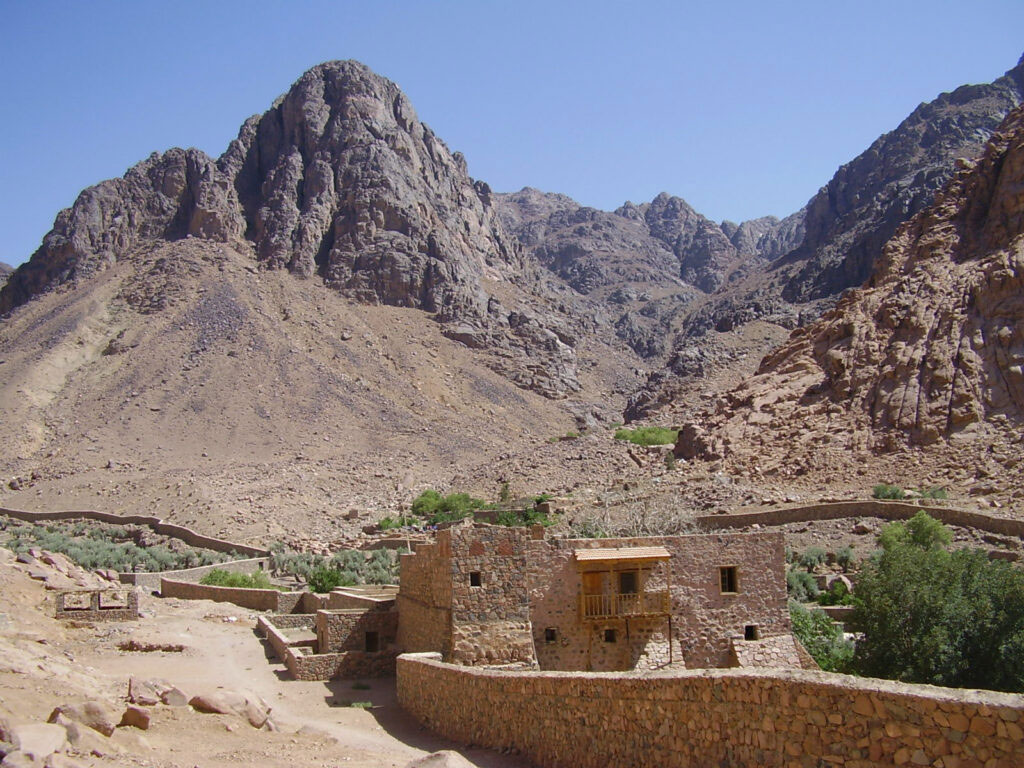
Standing in a valley southwest of Jebel Musa, the Monastery of the Forty Martyrs, known locally as Deir al-Arbaeen, commemorates forty Christian soldiers martyred for their faith. Tradition holds that hermits lived here from the early Byzantine period, drawn by its solitude and spring. The monastery is quite small, but its orchard, still beautifully maintained, is remarkably large. Although the building is more modest than St Catherine’s Monastery, it reflects the rhythm of monastic life in Sinai, where prayer was combined with labor in the fields. Within the orchard stands an old chapel dedicated to St Onuphrius, a hermit from Upper Egypt who reportedly lived in a nearby rock shelter for around 70 years and died in 390 CE.
Monastery of Saint Katherine
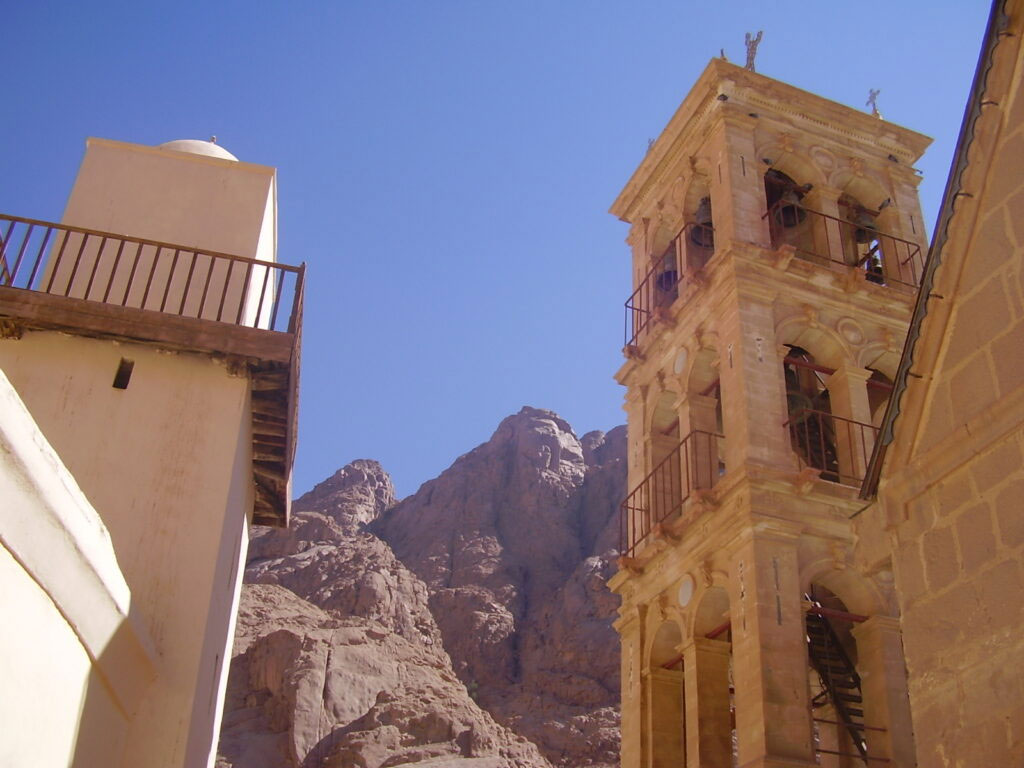
St Catherine’s Monastery, officially the Sacred Monastery of the God-Trodden Mount Sinai, was built by Emperor Justinian in the 6th century at the foot of Jebel Musa. It is the world’s oldest continuously operating monastery and a UNESCO World Heritage Site. The monastery houses priceless icons, manuscripts, and the famed Burning Bush, revered as the one encountered by Moses. Its fortress-like walls sheltered monks for centuries, making it both a spiritual and cultural treasure. Today, it remains an active monastic community and a major pilgrimage destination for Christians worldwide.
ACTIVITIES: Water Sports > Around Town > Mount Sinai Hike > Christian Sites > Hiking & Trekking > Walking & Camel Safaris > 4×4 Desert Safaris > Rock Climbing > Body, Mind & Spirit